Junte-se a nós em uma viagem ao mundo dos livros!
Adicionar este livro à prateleira
Grey
Deixe um novo comentário Default profile 50px
Grey
Assine para ler o livro completo ou leia as primeiras páginas de graça!
All characters reduced
Unacknowledged - The Hidden Impact of Negative Emotions on Mental Health - cover
LER

Unacknowledged - The Hidden Impact of Negative Emotions on Mental Health

Dan Desmarques

Editora: 22 Lions

  • 0
  • 0
  • 0

Sinopse

Many people believe that the evil in the world is caused by external forces, while others use the same argument to say that this proves that there is no God or evil, but simply human nature and that evil is a part of it. But in Unacknowledged: The Hidden Impact of Negative Emotions on Mental Health, you will understand that both options are irrelevant because the true source of evil can be identified and explained. You will also realize that evil is a choice that many people make, and that if more people were educated and aware of this information, evil wouldn't exist.
 
Although acts of cruelty can be found throughout human history, they persist largely due to the rationalization and general acceptance of such acts by the masses and their unwillingness to choose other paths. As a result, depression and loneliness have also become part of our lives, and not many people believe that they can naturally overcome these emotional states.
 
Unacknowledged aims to replace the confusion that still shadows the world with clarity, giving multiple examples of what makes a person evil and how to stop such individuals, but also teaching how we can find our own peace of mind in such a world. It challenges the views of many religions in a way that is more genuine, honest, scientific, and essentially practical. It also gives you hope for a world with more justice, forgiveness, harmony, and dignity.
Disponível desde: 03/11/2024.
Comprimento de impressão: 125 páginas.


Outros livros que poderiam interessá-lo

  • Benito Mussolini - cover

    Benito Mussolini

    Cyril Taylor-Carr

    • 0
    • 0
    • 0
    “It’s better to live one day as a lion than 100 years as a sheep.”"I am the most terrible animal that's ever existed.""Democracy is beautiful in theory; in practice, it is a fallacy. You in America will see that someday.""It's good to trust others but, not to do so is much better."“I feel, when we have no friends upon whom to lean, or to look for moral guidance." (Mussolini)Benito Amilcare Andrea Mussolini, born on July 29, 1883, who went by the nickname “Il Duce” (“the Leader”), was a deeply unbalanced tyrannical Italian dictator who created the dreaded Fascist Party in 1919. Eventually, he held all power in Italy as the country’s prime minister from 1922 to 1943. An ardent socialist as a youth, Mussolini followed in his father's political footsteps but was expelled by the party for his overt support of World War I. As an evil dictator during World War II (even murdering his own son by lethal injection) he greatly overextended his forces and was eventually killed by his own people in Mezzegra, Italy. Here, for the first time, are the words of the great dictator himself in his twisted manifesto on the political movement he started and is still so feared to this very day.
    Ver livro
  • A Rare Recording of John Steinbeck's 1962 Nobel Prize in Literature Speech - cover

    A Rare Recording of John...

    John Steinbeck

    • 0
    • 0
    • 0
    John Ernst Steinbeck (February 27, 1902 - December 20, 1968), born in Salinas, CA, was an American writer who won the 1962 Nobel Prize in Literature "for his realistic and imaginative writings, combining as they do sympathetic humor and keen social perception." His writings include the novels Of Mice and Men (1937), the Pulitzer Prize–winning The Grapes of Wrath (1939), and East of Eden (1952). The following is Steinbeck's speech at the Nobel Banquet at the City Hall in Stockholm, December 10, 1962.
    Ver livro
  • The Shocking Truth about Technology Addiction - cover

    The Shocking Truth about...

    Zoey Fraisers

    • 0
    • 0
    • 0
    Technology has transformed nearly every aspect of modern life. From the moment we wake up to the moment we fall asleep, screens surround us—our smartphones, computers, tablets, and televisions keep us connected, entertained, and informed. While technological advancements have undoubtedly improved communication, productivity, and convenience, they have also created a growing dependency that many people fail to recognize. The line between regular technology use and addiction has become increasingly blurred, making it crucial to examine the true impact of our digital habits.  
    The rise of digital dependency is not an accident. Social media platforms, video games, and even workplace tools are designed to keep users engaged for as long as possible. Algorithms tailor content to our interests, notifications demand our attention, and the allure of endless scrolling can make it difficult to put our devices down. The result is a society where people check their phones hundreds of times a day, struggle to focus without digital stimulation, and feel uneasy when disconnected. What once seemed like simple entertainment has evolved into something far more powerful—an addiction that can reshape our thoughts, behaviors, and even brain chemistry.  
    Scientific research has shown that excessive technology use can rewire the brain in ways similar to drug and gambling addictions. Dopamine, the neurotransmitter associated with pleasure and reward, plays a key role in keeping users hooked. Each "like" on social media, each message received, and each new piece of content triggers small dopamine releases, reinforcing the habit and making it difficult to stop. Over time, this can lead to compulsive behavior, decreased attention spans, and an inability to find pleasure in offline activities. 
    Ver livro
  • Little Women Podcast: Social Life In Victorian Times (and why Jo lost the trip to Europe) - cover

    Little Women Podcast: Social...

    Niina Niskanen, Emily Lau

    • 0
    • 0
    • 0
    In the chapter “Calls,” Amy and Jo decide to make some social calls, a common custom among well-bred young ladies of their time. Amy, who enjoys proper manners and society, convinces Jo to accompany her, even though Jo finds such formalities dull and pretentious. Throughout the afternoon, Amy’s social grace and tact contrast sharply with Jo’s blunt honesty and impatience with convention. Amy enjoys the ritual of polite society, while Jo realizes that she prefers sincerity and simplicity to artificial manners. Join Emily and Niina when they dissect chapter Calls, and talk about various things, such as Amy's fondness towards the aristocracy, Jo's difficulties in taking compliments and also the last part of the chapter, where we get the explanation why Jo did not get to go to Europe with Aunt March.
    Ver livro
  • The Dollar - How the US Dollar Became a Popular Currency in Argentina - cover

    The Dollar - How the US Dollar...

    Mariana Luzzi, Ariel Wilkis

    • 0
    • 0
    • 0
    Originally published in Argentina in 2019 and now finally available in English, Luzzi and Wilkis's acclaimed book traces the history of the economic, social, and political relevance of the dollar in Argentina and its popularization over the years. 


    How did the dollar come to play such a leading role in Argentina's national existence? How and why did this global currency become a local currency on the other end of the Western hemisphere? Through the reconstruction of the social and cultural history of the US dollar in Argentina, Luzzi and Wilkis provide original insight into this sidebar of the dollar's history, showing how it became a "local" currency even outside its country of origin.
    Ver livro
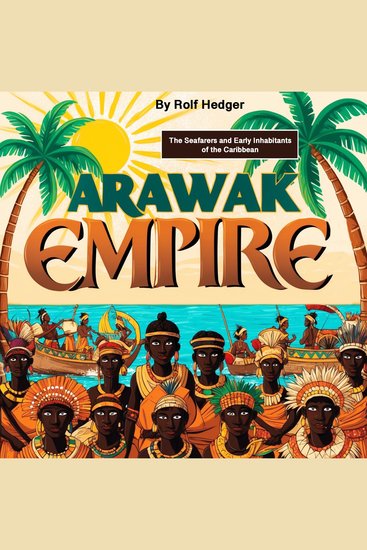
  • Arawak Empire - The Seafarers and Early Inhabitants of the Caribbean - cover

    Arawak Empire - The Seafarers...

    Rolf Hedger

    • 0
    • 0
    • 0
    The Arawak people trace their origins to the vast and resource-rich region of the Orinoco River basin in present-day Venezuela. As part of the larger Arawakan language family, they were one of the many groups that gradually expanded across South America and into the Caribbean. Their migration was driven by a combination of environmental factors, population growth, and the search for fertile land and abundant resources. Over generations, they navigated rivers, coastlines, and open waters, eventually settling in the islands of the Greater and Lesser Antilles, where they established thriving communities. 
    Archaeological evidence suggests that the Arawak migration into the Caribbean began around 2000 BCE, with the earliest settlements appearing in the Guianas and Trinidad before spreading to islands such as Hispaniola, Cuba, and Puerto Rico. The seafaring skills of the Arawak were instrumental in their expansion, allowing them to cross large distances using well-crafted dugout canoes. These vessels, some of which could carry dozens of people, enabled them to transport goods, establish trade networks, and maintain cultural connections between islands. 
    The Arawak developed a rich cultural identity deeply connected to their environment. They were skilled agriculturalists, cultivating staple crops such as cassava, maize, sweet potatoes, and fruits like guava and pineapple. Their farming methods, including slash-and-burn techniques and mound cultivation, allowed them to sustain large populations and support the growth of permanent villages. In addition to agriculture, they engaged in fishing and hunting, making use of the diverse ecosystems found throughout the Caribbean.
    Ver livro