Join us on a literary world trip!
Add this book to bookshelf
Grey
Write a new comment Default profile 50px
Grey
Subscribe to read the full book or read the first pages for free!
All characters reduced
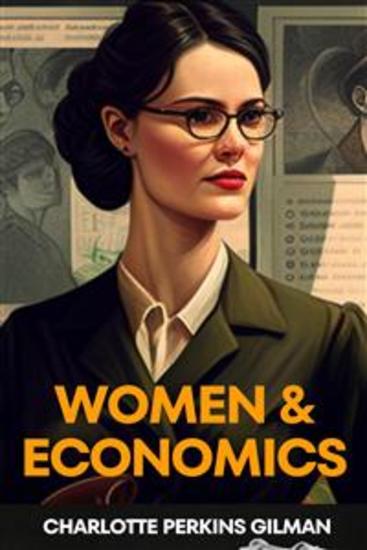
Women And Economics (Annotated) - cover

We are sorry! The publisher (or author) gave us the instruction to take down this book from our catalog. But please don't worry, you still have more than 500,000 other books you can enjoy!

Women And Economics (Annotated)

Charlotte Perkins Gilman

Publisher: Muhammad Humza

  • 0
  • 0
  • 0

Summary

In Women and Economics, Charlotte Perkins Gilman explores the social and economic roles of women in society. Written in 1898, this groundbreaking work challenges traditional gender roles and advocates for the economic and social equality of women.Gilman argues that the traditional role of women as dependent and domestic is not only limiting, but also detrimental to their overall well-being and the well-being of society as a whole. She believes that women should be able to participate fully in the workforce and have equal opportunities for education and professional advancement.Throughout the book, Gilman presents a compelling case for the economic benefits of women's empowerment. She argues that when women are able to participate fully in the workforce, it leads to greater productivity, more efficient use of resources, and ultimately, a stronger economy. She also contends that allowing women to have equal access to education and professional opportunities would lead to a more educated and skilled workforce.In addition to her economic arguments, Gilman also addresses the social and psychological effects of women's economic dependence. She contends that when women are not able to participate fully in society, they suffer from a lack of self-esteem and self-worth. She argues that this not only harms women, but also harms society as a whole.Women and Economics is a powerful and thought-provoking work that continues to be relevant today. It is a must-read for anyone interested in gender equality, women's rights, and the economic and social impact of women's empowerment.
Available since: 01/13/2023.
Other books that might interest you

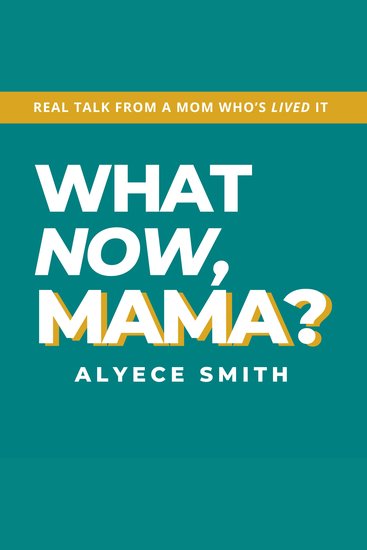
  • WHAT NOW MAMA? - The No-Fluff First-Year Guide for Autism Moms Who Want Clarity Calm and a Plan - cover

    WHAT NOW MAMA? - The No-Fluff...

    Alyece Smith

    • 0
    • 0
    • 0
    The No-Fluff, First-Year Guide for Autism Moms Who Want Clarity, Calm, and a Plan 
    You just heard the word Autism—and everything shifted. 
    Now you’re standing in a sea of acronyms, waitlists, and Google tabs… wondering what happens next. 
    This is the book you reach for when the diagnosis is fresh and the fog is real. 
    Written by a fellow Autism mom, What Now, Mama? is your no-judgment, straight-talking guide through the first year after diagnosis. 
    Inside, you’ll find: 
    ✔️ Simple breakdowns of therapies, IEPs, and sensory tools 
    ✔️ Scripts and strategies for school meetings, meltdowns, and burnout 
    ✔️ Journal pages, visual trackers, and calming plans—for you and your child 
    ✔️ Encouragement without toxic positivity 
    ✔️ A workbook section you’ll actually want to use 
    Whether you’re processing the news, fighting for services, or just trying to get through the day—this book meets you where you are. 
    You don’t need a degree. You don’t need perfection. You just need a plan. 
    A portion of every sale supports Caiden’s Corner Foundation, helping families access sensory kits, training, and real-life support after diagnosis. 
    Bonus: Includes QR code access to our Amazon favorites list with regulation tools, books, and mom essentials. 
    This isn’t a book about Autism. 
    It’s a book about you—navigating it, surviving it, and starting to own it.
    Show book
  • American Presidents - Andrew Jackson Richard Nixon Ronald Reagan and John F Kennedy - cover

    American Presidents - Andrew...

    Kelly Mass

    • 0
    • 0
    • 0
    This is a bundle book with biographies about the following USA presidents: 
    1 - Andrew Jackson was an American attorney, soldier, and statesman who acted as the seventh president of the U.S. from 1829 to 1837. Jackson rose to prominence as a basic in the US Army and served in both homes of Congress before being chosen to the presidency. Jackson, an expansionist president, defended the rights of the "commoner" and the Union against a "corrupt upper class." 
    2 - Richard Milhous Nixon was the United States' 37th president, serving from 1969 to 1974. Nixon, a Republican politician, formerly worked as the 36th Vice President from 1953 to 1961, after rising to country prominence as a California agent and senator. Following the Watergate occurrence, he ended up being the only president to leave from office after 5 years in the White Home that observed the end of the Vietnam War, détente with the Soviet Union and China, the first manned moon landings, and the starting of the Epa. 
    3 - Ronald Wilson Reagan was the 40th President of the U.S.A. of America, serving from 1981 to 1989. He was the Republican politician Party's 33rd ruler of California from 1967 to 1975, following a profession as a Hollywood star and labor organizer. Reagan was born in Tampico, Illinois, to a low-income family. In the year 1932, he finished from Eureka College and went to work in Iowa as a radio sports analyst. 
    4 - JFK, or John Fitzgerald Kennedy, was an American political leader who functioned as the 35th President of the US from 1961 till his assassination to the conclusion of his 3rd year in office. Kennedy was president throughout the height of the Cold War, and the majority of his time in office was spent handling the Soviet Union and Cuba. Prior to his presidency, Kennedy acted as a Democrat in both homes of Congress, representing Massachusetts.
    Show book
  • The Holodomor - The Brutal Terror-Famine Inflicted on Millions of Ukrainians by the Soviet Union - cover

    The Holodomor - The Brutal...

    Kelly Mass

    • 0
    • 0
    • 0
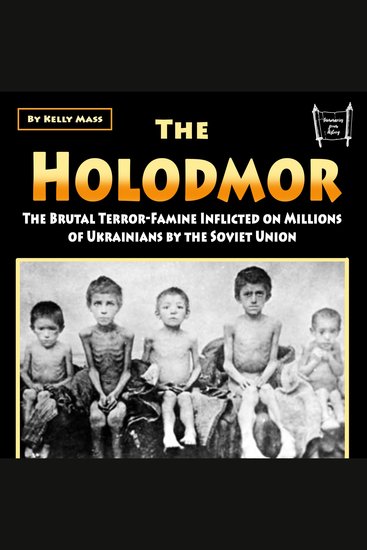
    The Holodomor, also known as the Terror-Famine (meaning 'to kill through starving' in Ukrainian) or The Great Famine, was a devastating man-made disaster that struck Soviet Ukraine between 1932 and 1933. It resulted in the deaths of millions of Ukrainians, with the word "Holodomor" specifically highlighting the purposeful nature of the famine. The term reflects the severity of the event, suggesting not only a catastrophic food shortage but also a deliberate attempt to destroy the Ukrainian population through starvation. Various factors contributed to the famine's man-made characteristics, including the refusal of Soviet authorities to allow outside aid, the forced confiscation of family food supplies, and the imposition of severe restrictions on population movement. 
    The Holodomor was part of a larger Soviet famine that affected other grain-producing regions of the USSR in the same period, but Ukraine, as one of the Soviet Union's most important agricultural producers, bore the brunt of the crisis. The famine was not a result of natural disasters but of Stalinist policies, such as forced collectivization, that wreaked havoc on Ukraine's agricultural systems. The Ukrainian people, most of whom were ethnic Ukrainians, faced the unimaginable toll of starvation in what remains one of the most catastrophic peacetime events in Ukrainian history. 
    Ukraine, along with 15 other countries, officially recognized the Holodomor as a genocide perpetrated by the Soviet regime against the Ukrainian people, a stance that has been supported since 2006. The question of how many people perished remains a subject of debate. A joint declaration made to the United Nations in 2003 suggested that between 7 and 10 million Ukrainians died during the famine. However, current estimates by scholars tend to range from 3.5 to 5 million deaths.
    Show book
  • Essays: First Series Heroism - cover

    Essays: First Series Heroism

    Ralph Waldo Emerson

    • 0
    • 0
    • 0
    True heroism does not seek applause. It does not wear armor or demand recognition. It walks quietly, steady in its purpose, untouched by fear or flattery. In Heroism, Ralph Waldo Emerson strips away the illusions of grandeur and reveals the essence of courage: a quiet, unwavering commitment to one's own principles.
    This is not a celebration of warriors or conquerors but of those who face the world with integrity, who move through life unshaken by its storms. Emerson's hero is not molded by circumstance but by an inner law, a deep sense of self that refuses to bend to convention or compromise. True bravery, he argues, is not found in extraordinary moments but in the quiet persistence of a soul that remains true to itself.
    Part of Essays: First Series, Heroism is an invitation to look beyond the theatrical and into the enduring. It is a reminder that the greatest strength is not in domination but in self-possession. To read it is to reconsider what it means to be fearless.
    Show book
  • The Facilitator's Guide for White Affinity Groups - Strategies for Leading White People in an Anti-Racist Practice - cover

    The Facilitator's Guide for...

    Robin DiAngelo, Amy Burtaine

    • 0
    • 0
    • 0
    While there are a few short articles and guides addressing the challenges and complexities of leading white affinity groups, there has never been a detailed handbook exclusively for white racial affinity group facilitators. There are many challenges in facilitating these groups, including the need to have a deep theoretical understanding of racism, a high degree of racial self-awareness, sensitivity to and the ability to work with the range of skills and degrees of awareness participants bring, and strong facilitation and conflict-resolution skills. This book is the first in-depth guide for educators, mediators, workplace consultants and trainers, workplace diversity groups, community organizers, conference organizers, members of faith communities, and members of racial and social justice groups. Dr. Robin DiAngelo and Amy Burtaine, who collectively bring over twenty years of experience leading anti-racist education and racial affinity groups, present the following: · a theoretical framework for understanding racism; · a case for the value of racial affinity groups as a tool for challenging racism; · guidelines for setting up affinity groups in a variety of contexts; · the skills and perspectives needed for effective facilitation; · scenarios to illustrate common challenges; · a glossary of definitions; · exercises, discussion prompts, and assessment tools. · an extensive list of common patterns and group dynamics and how to address them This accessible guide is an important reference for anyone committed to anti-racism work.
    Show book
  • Reimagining Jonah - A Flight to Freedom - cover

    Reimagining Jonah - A Flight to...

    Doug Wheeler

    • 0
    • 0
    • 0
    What would cause a proclaimed prophet to run away from everything he called home and dodge the 
    unyielding God of his tribe? Devoted to an uncompromising commitment to selfhood, Dr. Doug Wheeler 
    challenges the traditional assumption that Jonah was a miserable coward by examining him as a deeply 
    conflicted, courageous, and soulful man. With a poetic flair, Reimagining Jonah provokes and confounds 
    with language flavored by trauma and empathy, producing a richly contemplative and profoundly human 
    version of this well-known tale. 
    “Here is the story of Jonah like you have never heard it before! Doug Wheeler brings to his writing his 
    long wise years as a pastoral therapist. He knows that every story we tell — including Jonah’s — is thick 
    with subterranean transactions and freighted with background. It turns out that the story, in his gifted 
    artistry, is an account of being “born again” in freedom as a true self, engaged with the real world, and 
    partnered with the holy God who is well beyond all of our idols. Wheeler insists in an inescapable way on 
    our being participants in the narrative, with an earnest of good outcomes for our role in the story that is as 
    contemporary as it is ancient.” 
    — Walter Brueggemann, Professor Emeritus of Old Testament, Columbia Theological Seminary
    Show book