
Junte-se a nós em uma viagem ao mundo dos livros!
Adicionar este livro à prateleira
Grey
Deixe um novo comentário Default profile 50px
Grey
Assine para ler o livro completo ou leia as primeiras páginas de graça!
All characters reduced
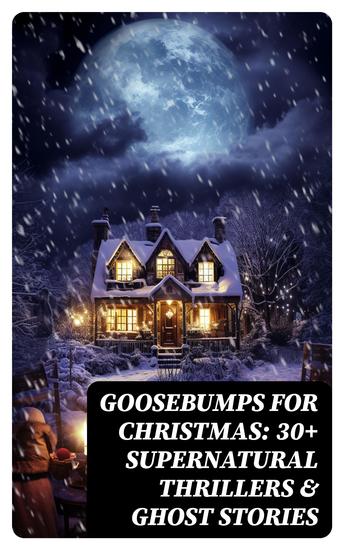
Goosebumps for Christmas: 30+ Supernatural Thrillers & Ghost Stories - cover
LER

Goosebumps for Christmas: 30+ Supernatural Thrillers & Ghost Stories

Charles Dickens, Nathaniel Hawthorne, George MacDonald, Saki Saki, Robert Louis Stevenson, Grant Allen, John Kendrick Bangs, Bithia Mary Croker, Florence Marryat, J.M. Barrie, E.F. Benson, Jerome K. Jerome, M. R. James, Algernon Blackwood, Mary Elizabeth Braddon, Arthur Conan Doyle, Sabine Baring-Gould, Frank R. Stockton, Fergus Hume, James Bowker, Thomas Hardy, Catherine Crowe, Katherine Rickford, William Douglas O'Connor, Leonard Kip, Catherine L. Pirkis, Lucie E. Jackson, Louisa M. Alcott, Joseph Sheridan Le Fanu

Editora: DigiCat

  • 0
  • 0
  • 0

Sinopse

Goosebumps for Christmas: 30+ Supernatural Thrillers & Ghost Stories is a captivating anthology that transports readers into the unsettling realm of Christmas-themed supernatural narratives. Encompassing a wide range of literary styles, from the psychologically chilling to the whimsically eerie, this collection showcases the labyrinthine imaginations of some of the most esteemed authors from the Gothic and Victorian eras. Each tale intricately weaves themes of ghostly visitations, moral reckoning, and the ethereal unknown, with standout stories skillfully blending the festive ambiance with spectral thrills, ensuring readers are both enchanted and unnerved. The anthology features an eclectic assembly of writers, each contributing their unique voice to the overarching theme of Christmas and the supernatural. Renowned authors such as Dickens and Doyle, alongside lesser-known literary talents, draw from diverse cultural and historical backdrops, enriching the collection with varied interpretations of ghost lore and Victorian society's fascination with the paranormal. This convergence of voices offers a comprehensive exploration of how Christmas, often synonymous with light and joy, can unveil the dark, enigmatic corners of human psyche and morality. Goosebumps for Christmas invites readers on a mesmerizing journey through a kaleidoscope of supernatural tales, ideal for those eager to explore the intersection of festive cheer and otherworldly mystery. It presents an unparalleled opportunity to experience a confluence of storytelling mastery, providing both educational insights and a gripping read. Readers are encouraged to immerse themselves in this timeless collection, gaining a deeper understanding of the narrative techniques that make ghost stories resonate across generations, while fostering an appreciation for the rich tapestry of voices united within its pages.
Disponível desde: 13/12/2023.
Comprimento de impressão: 1015 páginas.
Outros livros que poderiam interessá-lo

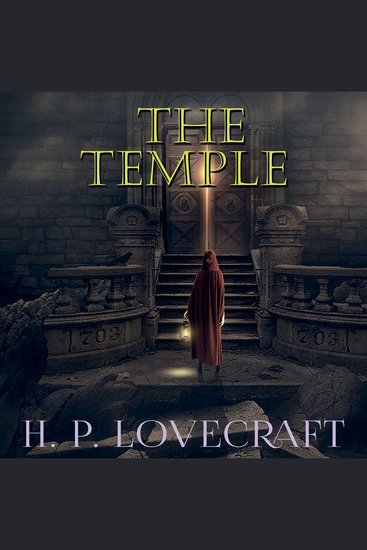
  • The Temple - cover

    The Temple

    H. P. Lovecraft

    • 0
    • 0
    • 0
    "The Temple" is a short story written by H. P. Lovecraft in 1920, and first published in the pulp magazine Weird Tales #24 in September 1925. The story is narrated as a "found manuscript" penned by Karl Heinrich, Graf von Altberg-Ehrenstein, a lieutenant-commander in the Imperial German Navy during the days of World War I. Altberg begins by declaring that he has decided to document the events leading up to his untimely end in order to "set certain facts" before the public, aware that he will not survive to do so himself. In the North Atlantic, after sinking a British freighter and its occupied lifeboats, the cruel and arrogant Altberg commands his U-boat to submerge, surfacing later to find the dead body of a seaman who died clinging to the exterior railing of the sub. A search of the body reveals a strange piece of carved ivory. Because of its apparent great age and value, one of Altberg's officers keeps the object, and shortly thereafter, strange phenomena begin to occur - such as the dead man apparently swimming away rather than sinking...
    Ver livro
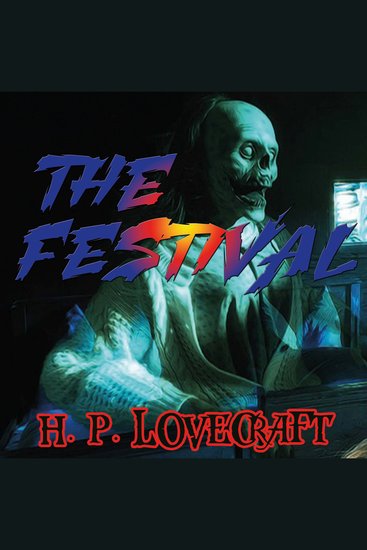
  • The Festival - cover

    The Festival

    H. P. Lovecraft

    • 0
    • 0
    • 0
    "The Festival" is a short story by H. P. Lovecraft written in October 1923 and published in the January 1925 issue of Weird Tales. The story was inspired by Lovecraft's first trip to Marblehead, Massachusetts, in December 1922. Lovecraft later called that visit "the most powerful single emotional climax experienced during my nearly forty years of existence." In a flash all the past of New England—all the past of Old England—all the past of Anglo-Saxondom and the Western World--swept over me and identified me with the stupendous totality of all things in such a way as it never did before and never did again. That was the high tide of my life. The narrator's path through Kingsport corresponds to a route to the center of Marblehead; the house with the overhanging second story is probably based on Marblehead's 1 Mugford Street. The church in the story is St. Michael's Episcopal Church on Frog Lane. Built in 1714, it is the oldest Anglican church in New England that is still standing at its original site. The church is on a modest hill; for most of the 18th century, it had a steeple. Its crypt, where parishioners were interred, remains. Since Lovecraft visited the church (as evidenced by his signature in the guest register), he may have spoken with the rector and learned such details about the church.
    Ver livro
  • The Fall of the House of Usher - cover

    The Fall of the House of Usher

    Edgar Allan Poe

    • 0
    • 0
    • 0
    An unnamed narrator approaches the house of Usher on a “dull, dark, and soundless day.” This house—the estate of his boyhood friend, Roderick Usher—is gloomy and mysterious. The narrator observes that the house seems to have absorbed an evil and diseased atmosphere from the decaying trees and murky ponds around it. He notes that although the house is decaying in places—individual stones are disintegrating, for example—the structure itself is fairly solid. There is only a small crack from the roof to the ground in the front of the building. He has come to the house because his friend Roderick sent him a letter earnestly requesting his company. Roderick wrote that he was feeling physically and emotionally ill, so the narrator is rushing to his assistance. The narrator mentions that the Usher family, though an ancient clan, has never flourished. Only one member of the Usher family has survived from generation to generation, thereby forming a direct line of descent without any outside branches. The Usher family has become so identified with its estate that the peasantry confuses the inhabitants with their home. 
    The narrator decides to read to Roderick in order to pass the night away. He reads “Mad Trist” by Sir Launcelot Canning, a medieval romance. As he reads, he hears noises that correspond to the descriptions in the story. At first, he ignores these sounds as the vagaries of his imagination. Soon, however, they become more distinct and he can no longer ignore them. He also notices that Roderick has slumped over in his chair and is muttering to himself. The narrator approaches Roderick and listens to what he is saying. Roderick reveals that he has been hearing these sounds for days, and believes that they have buried Madeline alive and that she is trying to escape.
    Ver livro
  • Angel Eye - cover

    Angel Eye

    Madeleine Nakamura

    • 0
    • 0
    • 0
    BOOK 2 OF THE CURSEBREAKERS SERIES, FEATURED #1 ON KIRKUS REVIEWS' 20 SCIENCE FICTION FANTASY NOVELS THAT WILL BLOW YOUR MIND 


    Author Madeleine Nakamura plunges listeners back into her spellbinding series, where Professor Adrien Desfourneaux's journey through peril, passion, and dark magic takes a thrilling new turn in Angel Eye. 


    "A queer, smart, bewitching read." —Meredith Katz, author of The Cybernetic Tea Shop 


    When a healer begins murdering hospital patients, Professor Adrien Desfourneaux discovers that the threat is far closer to him than he could have imagined. 


    Still recovering from a recent institutionalization and unable to trust his own mind or magic, Adrien is drawn into the witch hunt as suspicion falls upon those closest to him. The city's inquisitors and witchfinders are losing control, the magicians are growing more and more resentful, and the scars from Adrien's last brush with disaster refuse to fade. To put an end to the innocent deaths, to keep his dearest friends, and to prove himself worthy of a potential new romance, Adrien is forced to confront his own blind spots before he's fatally ensnared by the angel of death's machinations.
    Ver livro
  • The Outsider - cover

    The Outsider

    H. P. Lovecraft

    • 0
    • 0
    • 0
    "The Outsider" is a short story by American horror writer H. P. Lovecraft. Written between March and August 1921, it was first published in Weird Tales, April 1926. In this work, a mysterious individual who has been living alone in a castle for as long as he can remember decides to break free in search of human contact and light. "The Outsider" is one of Lovecraft's most commonly reprinted works and is also one of the most popular stories ever to be published in Weird Tales."The Outsider" combines horror, fantasy, and gothic fiction to create a nightmarish story, containing themes of loneliness, the abhuman, and the afterlife. Its epigram is from John Keats' 1819 poem "The Eve of St. Agnes".In a letter, Lovecraft himself said that, of all his tales, this story most closely resembles the style of his idol Edgar Allan Poe, writing that it "represents my literal though unconscious imitation of Poe at its very height." The opening paragraphs echo those of Poe's "Berenice", while the horror at the party recalls the unmasking scene in "The Masque of the Red Death".
    Ver livro
  • The Cats of Ulthar - cover

    The Cats of Ulthar

    H. P. Lovecraft

    • 0
    • 0
    • 0
    "The Cats of Ulthar" is a short story written by American fantasy author H. P. Lovecraft in June 1920. In the tale, an unnamed narrator relates the story of how a law forbidding the killing of cats came to be in a town called Ulthar. As the narrative goes, the city is home to an old couple who enjoy capturing and killing the townspeople's cats. When a caravan of wanderers passes through the city, the kitten of an orphan (Menes) traveling with the band disappears. Upon hearing of the couple's violent acts towards cats, Menes invokes a prayer before leaving town that causes the local felines to swarm the cat-killers' house and devour them. Upon witnessing the result, the local politicians pass a law forbidding the killing of cats.
    Ver livro