
Join us on a literary world trip!
Add this book to bookshelf
Grey
Write a new comment Default profile 50px
Grey
Subscribe to read the full book or read the first pages for free!
All characters reduced
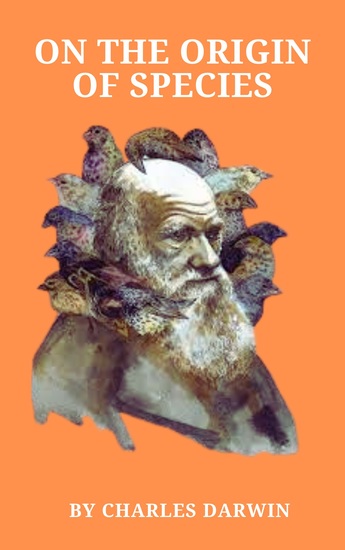
On the Origin of Species - Darwin's Groundbreaking Theory of Evolution - cover

On the Origin of Species - Darwin's Groundbreaking Theory of Evolution

Charles Darwin, Zenith Crescent Moon Press

Publisher: Zenith Crescent Moon Press

  • 0
  • 0
  • 0

Summary

Unlock the mysteries of life's diversity with "On the Origin of Species," Charles Darwin's revolutionary work that forever changed our understanding of the natural world.

Delve into the mind of one of history's greatest scientists as Charles Darwin presents his theory of evolution by natural selection. "On the Origin of Species" meticulously details the evidence and observations that led to this groundbreaking discovery, challenging conventional beliefs about the origins of life. Through vivid explanations and compelling arguments, Darwin explores the interconnectedness of all living beings and the mechanisms that drive their adaptation and survival. This seminal work is a must-read for anyone curious about the natural world and the forces that shape it.

Celebrated as one of the most influential scientific works ever published, "On the Origin of Species" has earned praise from scientists and scholars worldwide. "A monumental achievement that remains a cornerstone of biological science," says Dr. Richard Dawkins, evolutionary biologist and author.

Embark on a journey of scientific discovery. Purchase "On the Origin of Species: Darwin's Groundbreaking Theory of Evolution" today and explore the wonders of nature through the eyes of Charles Darwin.
Available since: 03/02/2025.
Print length: 576 pages.


Other books that might interest you

  • Conspiracies of World War II - Devious Plots Sinister Saboteurs and Extraordinary Enigmas - cover

    Conspiracies of World War II -...

    Alexander MacDonald

    • 0
    • 0
    • 0
    There are a wealth of conspiracies surrounding World War II, from covert assassinations to outlandish secret missions and shocking cover-ups. Intelligence agencies practiced stunning deceptions and disinformation was spread widely, but what truths lie beneath these elaborate theories? Military historian Alexander Macdonald examines the evidence. 
     
    In this fascinating book, you will learn whether:The Nazis really set up a secret base in AntarcticaFranklin D. Roosevelt allowed Pearl Harbor to be bombed so that America could be drawn into the warA secret plot by US intelligence led to the assassination of top general George PattonAdolf Hitler really faked his own death and escaped from the bunker in 1945
    Show book
  • All the Ways Our Dead Still Speak - A Funeral Director on Life Death and the Hereafter - cover

    All the Ways Our Dead Still...

    Caleb Wilde

    • 0
    • 0
    • 0
    What if our dead remain with us? What if closure is not the goal? No matter what you believe about the afterlife, what if the hereafter intersects with the here and now? 


    Caleb Wilde, author of the acclaimed memoir Confessions of a Funeral Director, was a skeptic. The baffling stories people told him—deathbed visions of long-dead parents, visits from the other side—must be hallucinations or wishful thinking, he thought. But the more stories he heard, and the more he learned about non-Western understandings of body and spirit, the less sure he was. 


    All the Ways Our Dead Still Speak takes listeners on a lyrical and tender quest to encounter the hereafter. As Wilde picks up bodies, organizes funerals, and meets with grieving families in a small town in Pennsylvania, those who remain share with him—and us—what they experience in the thin places between life and death. Entwining these stories with his own as a sixth-generation funeral director, and with the findings of neuroscience and the solace of faith, Wilde creates a searching, reverent inquiry into all the ways our dead remain with us. In the process, he takes on prevailing dogmas about death: from a narrow Christian view of heaven and hell, to secular assumptions that death is the end, to pop-psychology maxims that say we all need "closure" after our loved ones die.
    Show book
  • More than a Glitch - Confronting Race Gender and Ability Bias in Tech - cover

    More than a Glitch - Confronting...

    Meredith Broussard

    • 0
    • 0
    • 0
    The word "glitch" implies an incidental error, as easy to patch up as it is to identify. But what if racism, sexism, and ableism aren't just bugs in mostly functional machinery—what if they're coded into the system itself? Meredith Broussard demonstrates in More Than a Glitch how neutrality in tech is a myth and why algorithms need to be held accountable. 


    Broussard, a data scientist and one of the few Black female researchers in artificial intelligence, masterfully synthesizes concepts from computer science and sociology. She explores a range of examples: from facial recognition technology trained only to recognize lighter skin tones, to mortgage-approval algorithms that encourage discriminatory lending, to the dangerous feedback loops that arise when medical diagnostic algorithms are trained on insufficiently diverse data. Even when such technologies are designed with good intentions, Broussard shows, fallible humans develop programs that can result in devastating consequences. 


    Broussard argues that the solution isn't to make omnipresent tech more inclusive, but to root out the algorithms that target certain demographics as "other" to begin with. With sweeping implications for fields ranging from jurisprudence to medicine, More Than a Glitch is a must-listen for anyone invested in building a more equitable future.
    Show book
  • Socially Psyched: A Short Book Breaking Down Over a Dozen of the Most Important Findings in Social Psychology - cover

    Socially Psyched: A Short Book...

    Bo Bennett PhD

    • 0
    • 0
    • 0
    This is a collection of what I feel are some of the most important social/cognitive psychology experiments, studies, demonstrations, biases, and systematic reviews, presented in an entertaining way while adhering to academic standards. 
     
    I have always been fascinated by how our behaviors, cognition (thoughts), and affect (how we feel) are greatly dependent upon our social environment and our imperfect brains. I find it fascinating--perhaps because I am an American who was raised in the typical American cultural environment where I learned that what we consider "the self" consists of some magic "soul" that defines who we are—our behaviors (including choices and decisions), our cognition (including thoughts and beliefs), and our feelings. This could not be further from the truth. "We" are a result of an often incomprehensible interaction between biology and environment where some traits are more greatly influenced by social factors than others. Who we are is a result of social forces—the influence of other people and the human-created systems in which we operate. We can ignore this fact, maintain an illusion of control, or face reality and learn how to navigate this world and come out on top—personally, professionally, and financially. I choose the latter. 
     
    My name is Bo Bennett, and I hold a PhD in social psychology with a passion for this subject. While this book is not about me, my interpretations and commentary do make up most of the sections of each entry based on the content written by the original authors of the research or other sources—each of which will be cited when used. 
    Enjoy this short book! 
     
    Bo Bennett, PhD
    Show book
  • The Poverty of the World - Rediscovering the Poor at Home and Abroad 1941-1968 - cover

    The Poverty of the World -...

    Sheyda F. A. Jahanbani

    • 0
    • 0
    • 0
    In The Poverty of the World, Sheyda Jahanbani brings together the histories of United States foreign relations and domestic politics to explain why, during a period of unprecedented affluence, Americans rediscovered poverty and supported major policy initiative to combat it. Revisiting a moment of triumph for American liberals in the 1940s, Jahanbani shows how the United States's newfound role as a global superpower prompted novel ideas among liberal thinkers about how to address poverty and generated new urgency for trying to do so. Their sense of responsibility about deploying American knowledge and wealth as a beneficent force in the world, produced such foreign aid programs as the Peace Corps. 


    Drawing on a wide variety of archival material, Jahanbani reinterprets the lives and work of prominent liberal figures in postwar American social politics to show the global origins of their ideas. By tracing how American liberals invented the problem of "global poverty" and executed a war against it, The Poverty of the World sheds new light on the domestic impacts of the Cold War, the global ambitions of American liberalism, and the way in which key intellectuals and policymakers worked to develop an alternative vision of United States empire in the decades after World War II.
    Show book
  • Rise and Decline of Nations The: Book Summary & Analysis - cover

    Rise and Decline of Nations The:...

    Briefly Summaries

    • 0
    • 0
    • 0
    This is a concise summary and analysis of The Rise and Decline of Nations, by Mancur Olson.
     
    It is not the original book and is not affiliated with or endorsed by Mancur Olson.
     
    Ideal those seeking a quick and insightful overview.
     
    The Rise and Decline of Nations explores the intricate relationship between economic growth, political stability, and the institutional frameworks that govern societies. Drawing from history, economics, and sociology, the book examines how entrenched interest groups and collective actions shape the prosperity—or stagnation—of nations. With thought-provoking insights, it challenges conventional wisdom about power dynamics, providing a groundbreaking perspective on why some nations thrive while others falter.
    Show book