Unisciti a noi in un viaggio nel mondo dei libri!
Aggiungi questo libro allo scaffale
Grey
Scrivi un nuovo commento Default profile 50px
Grey
Iscriviti per leggere l'intero libro o leggi le prime pagine gratuitamente!
All characters reduced
Wolves on Road - cover

Wolves on Road

Beru Tessema

Casa editrice: Nick Hern Books

  • 0
  • 0
  • 0

Sinossi

'I think your son just made ten thousand pounds…'
Manny dreams of being a big dog. Right now he's just hocking fake designer goods, living with his mum and putting up with her annoying new boyfriend. The glittering skyscrapers of Canary Wharf out there through the window have never seemed so far away.
So when his best friend offers him a way to make unimaginable amounts of money, it's impossible to ignore. And soon Manny is pulling his family into a whole world of trouble.
Beru Tessema's play Wolves on Road is a thrilling deep-dive into the mysterious world of cryptocurrency, revealing how ambition and hope can be exploited, no matter the system at play. It was first performed at the Bush Theatre, London, in 2024, directed by Associate Artistic Director Daniel Bailey, in a co-production with Tamasha.
Disponibile da: 21/11/2024.
Lunghezza di stampa: 136 pagine.

Altri libri che potrebbero interessarti

  • Feng Menglong's Judge Bao: the Footsteps of a Spirit - ancient Chinese crime fiction retold by Michael Henrik Wynn - cover

    Feng Menglong's Judge Bao: the...

    Feng Menglong, Michael Henrik Wynn

    • 0
    • 0
    • 0
    The emergence of crime fiction was closely connected to the development of a modern legal system. In Germany there were the true crime stories August Gottlieb Meißner (1753-1804), in Britain The Newgate Calendar (1774) and in France the romanticized publications of Eugène-François Vidocq (1775-1857), the first chief of the Sûreté.  
    China has one of the oldest bureaucracies on earth. A real life judge from the early Middle Ages became their Sherlock Holmes, and was transformed into one of the most beloved Chinese literary characters. In this audiobook Michael Henrik Wynn, the editor of the educational net radio stream Historyradio.org, retells a classic gong’an legend about the iconic Judge Bao. The original story was published by Feng Menglong (1574–1646), but this is not a direct translation.
    Mostra libro
  • Born in the USA - The New England Poets - Exploring America in poems - cover

    Born in the USA - The New...

    Henry Wadsworth Longfellow,...

    • 0
    • 0
    • 0
    1 - Born in the USA - The New England Poets - An Introduction 
    2 - June by Horatio Alger Jr 
    3 - On the Discoveries of Captain Lewis, January 14th 1807 by Joel Barlow 
    4 - America the Beautiful by Katharine Lee Bates 
    5 - If You Could Come by Katharine Lee Bates 
    6 - Above the Battle by Katherine Lee Bates 
    7 - Turn Me to My Yellow Leaves by William Stanley Braithwaite 
    8 - A Hymn of the Sea by William Cullen Bryant 
    9 - Summer Wind by William Cullen Bryant 
    10 - November by William Cullen Bryant 
    11 - I Would Not Paint a Picture by Emily Dickinson 
    12 - I Have a Bird in Spring by Emily Dickinson 
    13 - The Name of it is Autumn by Emily Dickinson 
    14 - Some Too Fragile for Winter Winds by Emily Dickinson 
    15 - I Went to Heaven by Emily Dickinson 
    16 - Credo by W E B Du Bois 
    17 - Teach Me I Am Forgotten by the Dead by Ralph Waldo Emerson 
    18 - Waves by Ralph Waldo Emerson 
    19 - Culture by Ralph Waldo Emerson 
    20 - Berrying by Ralph Waldo Emerson 
    21 - Days by Ralph Waldo Emerson 
    22 - Tenebris by Angelina Weld Grimké 
    23 - The Black Finger by Angelina Weld Grimke 
    24 - The Eyes of My Regret by Angelina Weld Grimké 
    25 - In the Reading Room of the British Museum by Louise Imogen Guiney 
    26 - Address to the Moon by Nathaniel Hawthorne 
    27 - The Ocean by Nathamiel Hawthorne 
    28 - Go to the Grave by Nathaniel Hawthorne 
    29 - The Old Man of the Sea by Oliver Wendell Holmes 
    30 - Prologue by Oliver Wendell Holmes 
    31 - Old Ironsides by Oliver Wendell Holmes 
    32 - A Calender of Sonnets - December by Helen Hunt Jackson 
    33 - A Calender of Sonnets - January by Helen Hunt Jackson 
    34 - A Calendar of Sonnets - September by Helen Hunt Jackson 
    35 - Octobers Bright Blue Weather by Helen Hunt Jackson 
    36 - In London Town by Walter Learned 
    37 - The Slave's Singing at Midnight by Henry Wadsworth Longfellow 
    38 - Song of Haiwatha (Extract) by Henry Wadsworth Longfellow 
    39 - An April Day by Henry Wadsworth Longfellow 
    40 - Loss and Gain by Henry Wadswoth Longfellow 
    41 - A Psalm of Life by Henry Wadsworth Longfellow 
    42 - Despair by H P Lovecraft 
    43 - Sunset by H P Lovecraft 
    44 - Ode for July 4th 1917 by H P Lovecraft 
    45 - Pacifist War Song - 1917 by H P Lovecraft 
    46 - Providence by H P Lovecraft 
    47 - In a Garden by Amy Lowell 
    48 - Dog Days by Amy Lowell 
    49 - Monadnock in Early Spring by Amy Lowell 
    50 - The Crescent Moon by Amy Lowell 
    51 - March Evening by Amy Lowell 
    52 - The First Snowfall by James Russell Lowell 
    53 - Above and Below by James Russell Lowell 
    54 - Of the Dawn of Freedom by James Russell Lowell 
    55 - To H W L on His Birthday 27th February 1867 by James Russell Lowell 
    56 - Slaves by James Russell Lowell 
    57 - The Red Cross Nurses by Thomas L Masson 
    58 - A December Day by Robert Fuller Murray 
    59 - Warren's Address by John Pierpoint 
    60 - The Economy of Slavery by John Pierpoint 
    61 - Hymn for the First of August by John Pierpoint 
    62 - Prayer for the Slave by John Pierpoint 
    63 - The Natives of America by Ann Plato 
    64 - Reflections, Written on Visiting the Grave of a Venerated Friend by Ann Plato 
    65 - A Dream Within a Dream by Edgar Allan Poe 
    66 - Dreamland by Edgar Allan Poe 
    67 - The Sleeper by Edgar Allan Poe 
    68 - Sonnet - Silence by Edgar Allan Poe 
    69 - Annabel Lee by Edgar Allan Poe 
    70 - Luke Havergal by Edwin Arlington Robinson 
    71 - Mr Flood's Party by Edwin Arlington Robinson 
    72 - The Children of the Night by Edwin Arlington Robinson 
    73 - The Flying Dutchman by Edwin Arlington Robinson 
    74 - In No
    Mostra libro
  • Rhyme A Dozen A - Sunset - 12 Poets 12 Poems 1 Topic - cover

    Rhyme A Dozen A - Sunset - 12...

    HP Lovecraft, Dante Gabriel...

    • 0
    • 0
    • 0
    ‘A dime a dozen’ as known in America, is perhaps equal to the English ‘cheap as chips’ but whatever the lingua franca of your choice in this series we hereby submit ‘A Rhyme a Dozen’ as 12 poems on many given subjects that are a well-rounded gathering, maybe even an essential guide, from the knowing pens of classic poets and their beautifully spoken verse to the comfort of your ears. 
     
    01 - A Rhyme A Dozen - 12 Poems, 12 Poets, 1 Topic - Sunset - An Introduction 
    02 - At Sunset Time by Paul Laurence Dunbar 
    03 - Sunset in the City by Richard Le Gallienne 
    04 - After Sunset by William Allingham 
    05 - Sunset by H P Lovecraft 
    06 - From Sunset to Star Rise by Christina Georgina Rossetti 
    07 - Sunset by Israel Zangwill 
    08 - Winter Sunset by Katharine Tynan 
    09 - Sunset by Ann Radcliffe 
    10 - How The Old Mountains Drip With Sunset by Emily Dickinson 
    11 - Sunset Wings by Dante Gabriel Rossetti 
    12 - An Autumn Sunset by Edith Wharton 
    13 - The Red Sunsets by Mathilde Blind
    Mostra libro
  • The Poetry of James Russell Lowell - Harvard graduate Lowell was one of the most prominent poets of the American Romantic movement he chose to use poetry for both beauty and social causes mainly abolishing slavery - cover

    The Poetry of James Russell...

    James Russell Lowell

    • 0
    • 0
    • 0
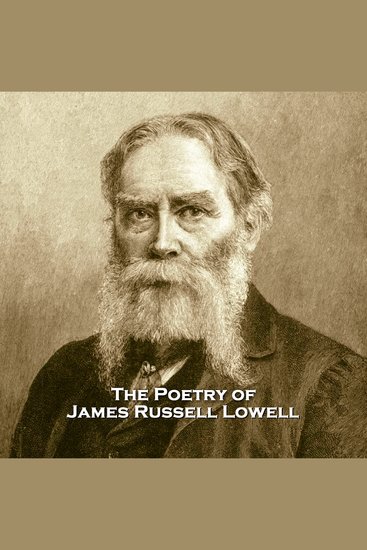
    James Russell Lowell was born on 22nd February 1819 in Cambridge, Massachusetts. 
     
    Lowell graduated from Harvard in 1838, and thence on to earn a law degree from Harvard Law School.  
     
    His literary life began in 1841 with his first published collection of poetry.  Three years later he married Maria White and they had several children although, sadly, only one was to survive childhood. 
     
    A consuming issue at the time was the abolition of slavery.  Lowell was a staunch supporter even going so far as to move to Philadelphia to edit an abolitionist newspaper.  His poems were fully in support of Emancipation and the ending of this terrible abomination.  His later views were milder and came in for some criticism.  
     
    His publication in 1848 of the long poem ‘A Fable for Critics’, satirising the poets and critics of the then current poetry scene caused an uproar.  That same year came ‘The Biglow Papers’, which increased his fame and his finances.  His use of the Yankee accent in his character’s dialogue was an inspiration for many. 
     
    Maria died in 1853 and Lowell decided to travel to Europe for some time before returning to Harvard to take up a professorship of languages.   In 1857 he re-married and also took on the editorship of that key periodical ‘The Atlantic Monthly’ whilst continuing to teach at Harvard. 
     
    Lowell wrote and published poetry and essay collections throughout his literary career and is acknowledged as one of the ‘Fireside Poets’, a group of New England poets that rivalled the popularity of British poets.  Their work was not controversial and suitable for whole families to enjoy hence their name and appeal.  Whilst Lowell’s own work does not now attract the same praise as his then contemporaries, he was their equal. 
     
    Towards the end of his life Lowell was appointed as ambassador to the Kingdom of Spain and later to the Court of St. James's.  
     
    His last years were a return home to his estate in Cambridge, Massachusetts.  By the summer of 1891 doctors had diagnosed cancer in his kidneys, liver and lungs.  There was nothing that they could do except prescribe opium for the pain. 
     
    James Russell Lowell died on the 12th of August 1891 on the Cambridge estate where he was also born.  He was 72. 
     
    01 - The Poetry of James Russell Lowell - An Introduction 
    02 - Columbus by James Russell Lowell 
    03 - George Washington by James Russell Lowell 
    04 - Abraham Lincoln by James Russell Lowell 
    05 - To H W L on His Birthday 27th February 1867 by James Russell Lowell 
    06 - To Charles Eliot Norton - Agro Dolce by James Russell Lowell 
    07 - Winter Evening Hymn To My Fire by James Russell Lowell 
    08 - The First Snowfall by James Russell Lowell 
    09 - Midnight by James Russell Lowell 
    10 - On A Portrait of Dante by Giotto by James Russell Lowell 
    11 - A Contrast by James Russell Lowell 
    12 - Above and Below by James Russell Lowell 
    13 - Of the Dawn of Freedom by James Russell Lowell 
    14 - On Board the 76 by James Russell Lowell 
    15 - Trial by James Russell Lowell 
    16 - Ode to France, February 1848 by James Russell Lowell 
    17 - Slaves by James Russell Lowell 
    18 - An Incident in a Railroad Car by Jamers Russell Lowell 
    19 - Threnodia by James Russell Lowell 
    20 - A Requiem by James Russell Lowell 
    21 - On the Death of a Friends Child by James Russell Lowell
    Mostra libro
  • Hindsight - cover

    Hindsight

    Sofia Ivanova

    • 0
    • 0
    • 0
    Hindsight is the first collection of poetry released by Ivanova. In many ways, Hindsight is an autobiography, capturing Sofiya's pre-teen and early teen years, and all the feelings that come with it. 
    It covers topics such as losing your family pet, leaving behind your childhood, wanting to be special and important, your parents being imperfect people, mental health, etc, etc. And, of course, figuring out love. In Russian (the poet's first language), there's a saying that goes, “the first pancake comes out as a lump”, and that applies to love too. The first few pancakes, in this case. There are a lot of love poems. There are a lot of bitter poems, too, because art is a great outlet for anger. Those read as though they should have a mic drop at the end. 
    Hindsight not only reads like a coming of age collection as an introduction to the world of a new and gifted poet. But, it is also an exorcism and celebration of the past as she becomes a poet that sees the world with clarity and beauty; a poet that we all need.
    Mostra libro
  • Lycidas - Much shorter poem from the famed author of Paradise Lost - cover

    Lycidas - Much shorter poem from...

    John Milton

    • 0
    • 0
    • 0
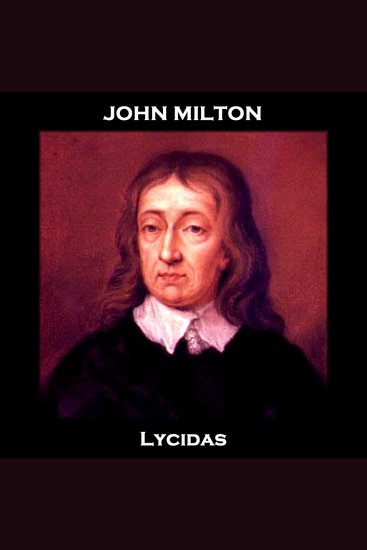
    John Milton was born in Bread Street, London, on December 9th, 1608.  His early years were privately tutored before gaining a place at St Paul’s School and in 1625 he matriculated at Christ's College, Cambridge, earning a BA in 1629 and an MA in 1632. At Cambridge he had developed a reputation for poetic skill but also experienced alienation from his peers and university life as a whole.  
    The next 6 years were spent in private study. He read both ancient and modern works of theology, philosophy, history, politics, literature and science, in preparation for a poetical career.  Milton mastered Latin, Greek, Hebrew, French, Spanish, and Italian. To these he would add Old English (whilst researching his History of Britain) and also acquired more than a passing acquaintance in Dutch.  
    Although he was studying, some of his poetry from this time is remarkable; L’Allegro and Il Penseroso in 1631 and Lycidias in 1638. 
    In May 1638, Milton embarked upon a 15 month tour of France and Italy. These travels added a new and direct experience of artistic and religious traditions, especially Roman Catholicism.  He cut the journey short to return home during the summer of 1639 because of what he claimed were "sad tidings of civil war in England."  
    Once home, Milton wrote prose tracts against episcopacy, in the service of the Puritan and Parliamentary cause.  
    He married 16-year-old Mary Powell in June 1643 but she left him after only a few months during which he wrote and published several writings on divorce. Mary did return after 3 years and their life thereafter seemed harmonious.  Milton received a hostile response to the divorce tracts and drove him to write Areopagitica, his celebrated attack on pre-printing censorship.  
    With the parliamentary victory in the Civil War, Milton wrote The Tenure of Kings and Magistrates (1649) which defended popular government and implicitly sanctioned the regicide which led to his appointment as Secretary for Foreign Tongues by the Council of State.  
    On 24 February 1652 Milton published his Latin defense of the English People, Defensio Pro Populo Anglicano, also known as the First Defense. Milton's Latin prose and intellectual sweep, quickly gained him a European reputation.  
    Tragically his first wife, Mary, died on May 5th, 1652 following the birth of their fourth child.   The following year Milton had become totally blind, probably due to glaucoma.  He then had to dictate his verse and prose to helpers, one of whom was the poet Andrew Marvell.  
    He married again to Katherine Woodcock but she died in February 1658, less than four months after giving birth to a daughter, who also tragically died.  
    Though Cromwell’s death in 1658 caused the English Republic to collapse Milton stubbornly clung to his beliefs and in 1659 he published A Treatise of Civil Power, attacking the concept of a state-dominated church. Upon the Restoration in May 1660, Milton went into hiding for his life. An arrest warrant was issued and his writings burnt. He re-emerged after a general pardon was issued, but was nevertheless arrested and briefly imprisoned before influential friends, such as Marvell, now an MP, intervened 
    His third marriage was to Elizabeth Mynshull. Despite a 31-year age gap, the marriage seemed happy and Milton spent the remaining decade of his life living quietly in London, apart from a short spell in Chalfont St. Giles, during the Great Plague of London.  
    Milton was to now publish his greatest works, which had been gestating for many years.  Paradise Lost, perhaps the classic English Epic poem was originally published in 10 books in 1667.  This was followed by Paradise Regained and Samson Agonistes in 1671.  Because of his anti-monarchy views their reception was muted but over the centuries since Milton has established himself as second only to Shakespeare.  He died of kidney failure on November 8th, 1674 and was buried in the church of St Giles Cripplegate.
    Mostra libro