Unisciti a noi in un viaggio nel mondo dei libri!
Aggiungi questo libro allo scaffale
Grey
Scrivi un nuovo commento Default profile 50px
Grey
Iscriviti per leggere l'intero libro o leggi le prime pagine gratuitamente!
All characters reduced
Sybil - cover

Sybil

Benjamin Disraeli

Casa editrice: Phoemixx Classics Ebooks

  • 0
  • 0
  • 0

Sinossi

Sybil Benjamin Disraeli - Sybil, or The Two Nations is one of the finest novels to depict the social problems of class-ridden Victorian England. The book's publication in 1845 created a sensation, for its immediacy and readability brought the plight of the working classes sharply to the attention of the reading public. The 'two nations' of the alternative title are the rich and poor, so disparate in their opportunities and living conditions, and so hostile to each other. that they seem almost to belong to different contries. The gulf between them is given a poignant focus by the central romantic plot concerning the love of Charles Egremont, a member of the landlord class, for Sybil, the poor daughter of a militant Chartist leader.
Disponibile da: 24/12/2021.
Lunghezza di stampa: 555 pagine.

Altri libri che potrebbero interessarti

  • Great Escapes of World War I The: The History of the Most Famous Prisoner Breakouts during the Great War - cover

    Great Escapes of World War I...

    Editors Charles River

    • 0
    • 0
    • 0
    In the first half of the 20th century, war was fought on a global and industrial scale. Millions of men were flung into the grinder of World War I and World War II, leading to commensurately huge numbers of prisoners of war (POWs). Camps were built to hold thousands of captives, with their own barracks blocks, parade grounds, and even farms. In World War I, there were several fronts in the war - Britain, France, Belgium, and Germany faced each other on the Western Front, fought mostly in northeast France and Belgium, while Germany and Austria Hungary faced Russia on the Eastern Front, where much of the war was fought in East Prussia and what is now Poland. The Italians and Austrians fought in the region of northeast Italy, and the Austrians and Bulgarians faced Serbia and then later an Allied army based in Salonica in the Balkans. The Ottomans faced Russia in northeast Anatolia, the British and Allied forces in the Mesopotamian campaign (mainly in today’s Iraq), the British in Palestine, and the Allies at Gallipoli.  
    	Regardless of rank, throughout the war, many of these men did not sit idle. Many spent their time preparing elaborate escape plans in the hopes of returning to their home nations and back to the fight. Following World War I, several books were published giving romantic accounts of successful escapes. For example, the wildly popular film The Great Escape (1963), has been a main factor in how the public views prisoners of war, and while that film was based on a book that details a mass escape of British and Allied prisoners from a World War II German prison camp for aviators, Stalag Luft III, a real escape from a German prisoner camp in World War I inspired the 1944 great escape from Stalag Luft III. 
    Mostra libro
  • Soap Magic Part 1 - Lesbian Threesome in the Bathroom - cover

    Soap Magic Part 1 - Lesbian...

    Kathrin Pissinger

    • 0
    • 0
    • 0
    Magic. Mayhem. Soap. 
    What would you do if you were a lonely lesbian with a crush on her boss who just happened upon a magical piece of soap that might make all your dreams come true? Would you end up in a threesome, sandwiched between her and your co-worker, getting served on both ends at the same time? Well, what if you really, really, really like your butt to be played with as well? Well, fine, but don't blame me for enjoying myself. Sheesh, everyone's a critic. 
    Anyway, this first part of Soap Magic contains awkward masturbation, less awkward lesbian flirting and enthusiastic lesbian sex with three very eager participants, one of which just happens to like anal a lot. Also contains soap magic.
    Mostra libro
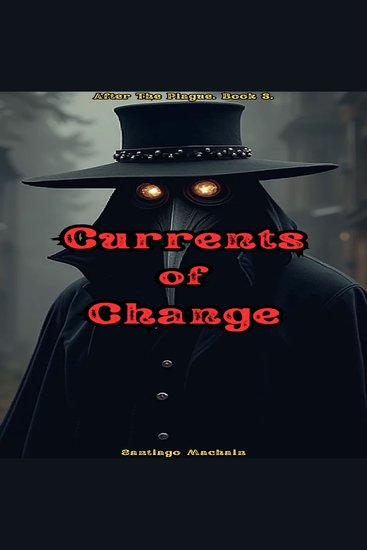
  • Currents of Change - cover

    Currents of Change

    Santiago Machain

    • 0
    • 0
    • 0
    Currents of Change explores the pivotal forces, encounters, and exchanges that have shaped the interconnected world we inhabit today. Spanning continents and centuries, this volume delves into the rise and fall of empires, the spread of ideas, the movement of people, and the evolution of economies. Through a humanized and insightful lens, it examines how trade, disease, religion, resistance, and innovation have woven together diverse societies, creating both opportunities and challenges. By tracing these global impacts, the book reveals the complexity, resilience, and creativity that define our shared human story.
    Mostra libro
  • Don't Trust Your Gut - Using Data to Get What You Really Want in Life - cover

    Don't Trust Your Gut - Using...

    Seth Stephens-Davidowitz

    • 0
    • 0
    • 0
    Seth Stephens-Davidowitz is as good a data storyteller as I have ever met.” — Steven Levitt, co-author, Freakonomics 
    Big decisions are hard. We consult friends and family, make sense of confusing “expert” advice online, maybe we read a self-help book to guide us. In the end, we usually just do what feels right, pursuing high stakes self-improvement—such as who we marry, how to date, where to live, what makes us happy—based solely on what our gut instinct tells us. But what if our gut is wrong? Biased, unpredictable, and misinformed, our gut, it turns out, is not all that reliable. And data can prove this. 
    In Don’t Trust Your Gut, economist, former Google data scientist, and New York Times bestselling author Seth Stephens-Davidowitz reveals just how wrong we really are when it comes to improving our own lives. In the past decade, scholars have mined enormous datasets to find remarkable new approaches to life’s biggest self-help puzzles. Data from hundreds of thousands of dating profiles have revealed surprising successful strategies to get a date; data from hundreds of millions of tax records have uncovered the best places to raise children; data from millions of career trajectories have found previously unknown reasons why some rise to the top. 
    Telling fascinating, unexpected stories with these numbers and the latest big data research, Stephens-Davidowitz exposes that, while we often think we know how to better ourselves, the numbers disagree. Hard facts and figures consistently contradict our instincts and demonstrate self-help that actually works—whether it involves the best time in life to start a business or how happy it actually makes us to skip a friend’s birthday party for a night of Netflix on the couch. From the boring careers that produce the most wealth, to the old-school, data-backed relationship advice so well-worn it’s become a literal joke, he unearths the startling conclusions that the right data can teach us about who we are and what will make our lives better. 
    Lively, engrossing, and provocative, the end result opens up a new world of self-improvement made possible with massive troves of data. Packed with fresh, entertaining insights, Don’t Trust Your Gut redefines how to tackle our most consequential choices, one that hacks the market inefficiencies of life and leads us to make smarter decisions about how to improve our lives. Because in the end, the numbers don’t lie. 
    Supplemental enhancement PDF accompanies the audiobook.
    Mostra libro
  • The Shame Complex - cover

    The Shame Complex

    Brittany Forrester

    • 0
    • 0
    • 0
    Shame is a notoriously unpleasant emotion that almost all of us have experienced at least once in our lifetimes. Almost everyone knows what the feeling of shame is like. However, we are reluctant to disclose our shameful experiences. It is often mentioned that shame is a taboo subject. Ironically, we are ashamed of our shame. It seems much easier to say ‚I am angry/sad/nervous? than to say ‚I am sorry.” Rather than finding it liberating, there is an assumption that talking about shame is demeaning or a sign of weakness. Therefore, until recently, there has been a shortage of research, understanding, and knowledge about shame to the extent that shame and similar emotions, such as guilt, are used interchangeably in the literature. Since shame appears present in a wide variety of psychological disorders and is associated with mental health problems such as depression, social phobia, and eating disorders, it is necessary to extend our knowledge in this area and become well-equipped to deal with it their shame. The current shame theorists suggest shame is one of the so-called self-conscious emotions because it mainly involves evaluating the self. A scandal is believed to be an incapacitating emotion accompanied by the feeling of being small, inferior, and shrinking. The self, as a whole, is devalued and considered to be inadequate, incompetent, and worthless. Shame might also involve being exposed, condemned, and ridiculed.Unlike basic emotions, shame does not seem to have distinctive universal facial expressions. It is not experienced similarly in different cultures. Emotions such as shame, pride, guilt, embarrassment, envy, empathy, and jealousy are associated with a sense of self and self-awareness; hence, they belong to a family of self-conscious emotions. To experience shame, individuals need the ability to form self-representations, internalize external values, and compare and evaluate themselves. Therefore, guilt is not experienced in species with lower cognitiv
    Mostra libro
  • Ottoman Empire and the World Around It The: Book Summary & Analysis - cover

    Ottoman Empire and the World...

    Briefly Summaries

    • 0
    • 0
    • 0
    This is a concise summary and analysis of The Ottoman Empire and the World Around It, by Suraiya Faroqhi.
     
    It is not the original book and is not affiliated with or endorsed by Suraiya Faroqhi.
     
    Ideal those seeking a quick and insightful overview.
     
    Explore the intricate relationships between the Ottoman Empire and its neighboring regions in this comprehensive examination of political, cultural, and economic interactions from the 16th to the 18th century. This book delves into how the empire navigated diplomacy, trade, and cultural exchange while maintaining its vast and diverse territories. With an emphasis on the interconnectedness of the Ottoman world and the broader global landscape, this work provides a nuanced understanding of one of history's most influential empires.
    Mostra libro