Join us on a literary world trip!
Add this book to bookshelf
Grey
Write a new comment Default profile 50px
Grey
Subscribe to read the full book or read the first pages for free!
All characters reduced
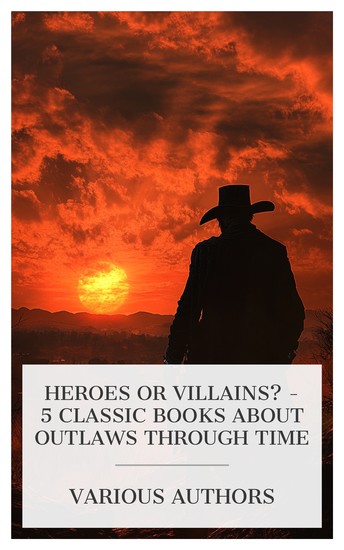
Heroes or Villains? - 5 Classic Books About Outlaws Through Time - Plays: The Father; Countess Julie; The Outlaw; The Stronger Life and Adventures of Frank and Jesse James the Noted Western Outlaws etc - cover

Heroes or Villains? - 5 Classic Books About Outlaws Through Time - Plays: The Father; Countess Julie; The Outlaw; The Stronger Life and Adventures of Frank and Jesse James the Noted Western Outlaws etc

August Strindberg, Lawrence Mott, J. A. Dacus

Publisher: e-artnow

  • 0
  • 0
  • 0

Summary

Heroes or Villains? - 5 Classic Books About Outlaws Through Time presents a captivating exploration of the outlaw archetype through various literary lenses and historical contexts. Spanning genres and styles, this anthology captures the compelling tension between rebellion and conformity, inviting readers to ponder the ambiguous moral landscape these protagonists navigate. The collection features an evocative range of storytelling, from poignant narratives to gritty tales, that challenge the conventional perceptions of heroism and villainy. Through this anthology, readers journey through narratives where societal boundaries are questioned, and the thin line between justice and rebellion is masterfully unraveled. The contributing authors, namely August Strindberg, J. A. Dacus, and Lawrence Mott, bring together an impressive literary pedigree and diverse socio-cultural perspectives that enrich this exploration. Strindberg’s intense explorations of individualism, Dacus's keen documentation of historical narratives, and Mott’s vivid character portrayals come together to present multifaceted views of outlaws across time. Their collective works encapsulate a wide array of historical and cultural influences, reflecting shifts in societal values and the recurring fascination with the figure of the outlaw standing at the crossroads of admiration and disdain. This anthology is a treasure trove for those seeking to understand the complex interplay of societal norms, individual morality, and the timeless allure of the outlaw. Readers are encouraged to immerse themselves in this diverse collection that not only entertains but also educates, offering insights into the evolving nature of law, order, and rebellion. Heroes or Villains? enhances our perspective on literary and historical archetypes through rich storytelling and invites a dialogue on the enduring impact of these enigmatic figures.
Available since: 03/04/2025.
Print length: 2546 pages.

Other books that might interest you

  • Russian Short Story The - Volume 4 - Nikolai Lyeskov to Anton Chekhov - cover

    Russian Short Story The - Volume...

    Anton Chekhov, Helena Blavatsky,...

    • 0
    • 0
    • 0
    The Russian novel has a reputation that is immense, both in narrative and in length.  Unquestionably though the ideas, themes and characters make many novels rightly revered as world class, as icons of literature. 
     
    Perhaps an easier way to enjoy a wider selection of the Russian heritage, with its varied and glorious literary talents, is with the short story.  These gems sparkle and beguile the mind with their characters and narrative, exploring facets of society and the human condition that more Western authors somehow find more difficult to navigate, or to explore, explain and relate to.   
     
    The Russian short story is, in many respects, in a genre of its own.  It is at its captivating best whether it’s an exploration of real-life experiences, through fantasy and fables and on to total absurdity. 
     
    In a land so vast it is unsurprising that it is a world almost unto itself. Cultures and landscapes of differing hues are packed together bound only by the wilful bonds and force of Empire. 
     
    The stories in this collection traverse the decades where one might be a serf under an absolute monarch, and the reality of that was pretty near to slavery, into an emancipation of sorts in the fields, or towns under the despotic will of landowners and the rich into the upheavals of Empire and then the overthrow of the ruling class and its replacement by the communists, who promised equality for all and delivered a society where the down-trodden remained the lowest yet vital cog of the state machine and its will.  
     
    Whilst Tolstoy, Gogol, Dostoevsky, Pushkin and Chekhov are a given in any Russian collection we also explore and include Andreyev, Korolenko, Turgenev, Blavatsky and many others to create a world rich and dense across a sprawling landscape of diverse people, riddled with the class and unfairness in perhaps some of the most turbulent times that Russia has ever experienced. 
     
    01 - The Russian Short Story - Volume 4 - An Introduction 
    02 - The Sentry by Nikolai Lyeskov 
    03 - A Witch's Den by Helena Blavatsky 
    04 - The General's Will by Vera Jelihovsky 
    05 - The Old Bell Ringer by Vladimir Korolenko 
    06 - The Shades, A Phantasy by Vladimir Korolenko 
    07 - The Signal by Vsevolod Garshin 
    08 - Dethroned by I N Potapenko 
    09 - The Kiss by Anton Chekhov 
    10 - The Lady with the Dog by Anton Chekhov 
    11 - The Bet by Anton Chekhov 
    12 - Gooseberries by Anton Chekhov
    Show book
  • The Unrest-Cure - cover

    The Unrest-Cure

    Saki Saki

    • 0
    • 0
    • 0
    The Unrest-Cure, a short story by Saki (H.H. Munro), satirizes the upper-class society of early 20th-century England through the lens of humor and absurdity. The narrative centers around Clovis Sangrail, a witty and mischievous young man who visits the dull Huddle siblings at their country estate. The Huddles are depicted as insipid and overly concerned with their mundane comforts.
    Show book
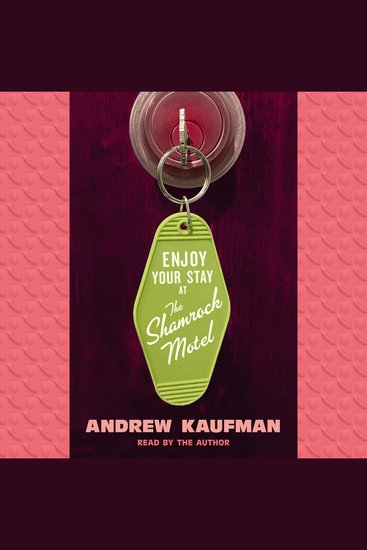
  • Enjoy Your Stay at the Shamrock Motel - cover

    Enjoy Your Stay at the Shamrock...

    Andrew Kaufman

    • 0
    • 0
    • 0
    Aesop meets Anaïs Nin in these absurdist stories of very unexpected redemption 
    Getting to the Shamrock Motel isn’t easy. It’s just off Concession #18, but you can’t get there through a sequence of lefts and rights. To find the Shamrock you have to be lost – not just on the map, but in your heart and soul. 
    The Shamrock Motel does not accept reservations. The only way to get a room is by walking into the office and asking Rosemary, the owner/operator for one. Try not to stare at her hair. 
    Fair warning: no one spends the night, or even an hour at the Shamrock without experiencing some form of transformation. Whether it’s accidentally sleeping with a bear, turning yourself into a river, or getting entirely too intimate with the sun, time spent at the Shamrock will make you wiser, stronger, sexier, and more yourself. Even if that’s the last thing you want. 
    These linked stories explore the intersection of personality and desire, love and lust, the joy and sadness of being alive and in love. Heated pool, cable TV, and a shot at redemption: the Shamrock Motel offers it all. Credit cards are accepted, but cash is preferred.
    Show book
  • Twilight of the Superheroes - Stories - cover

    Twilight of the Superheroes -...

    Deborah Eisenberg

    • 0
    • 0
    • 0
    Deborah Eisenberg is nearly unmatched in her mastery of the short-story form. Now, in her newest collection, she demonstrates once again her virtuosic abilities in precisely distilled, perfectly shaped studies of human connection and disconnection. From a group of friends whose luck in acquiring a luxurious Manhattan sublet turns to disaster as their balcony becomes a front-row seat to the catastrophe of 9/11; to the Roman holiday of a schoolteacher running away from the news of her ex-husband's life-threatening illness, and her unlikely guide, a titled art scout in desperate revolt against his circumstances and aging; to the too painful love of a brother for his schizophrenic sister, whose tragic life embitters him to the very idea of family, Eisenberg evokes "intense, abundant human lives" in which "everything that happens is out there waiting for you to come to it."
    Show book
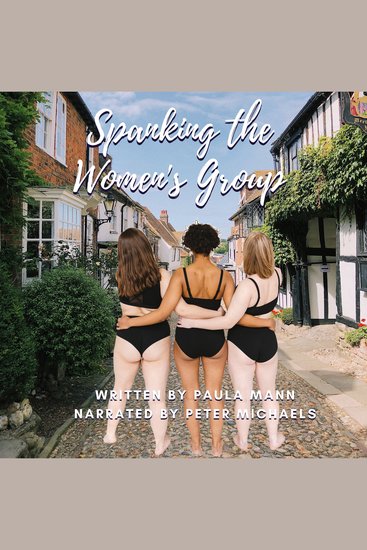
  • Spanking the Women's Group - Jack is asked to play cards with the Women’s Group where the losing team is spanked - cover

    Spanking the Women's Group -...

    Paul Amann

    • 0
    • 0
    • 0
    Jack buys a house in the Cornwall village of Little Trumpington after a difficult divorce. At fifty-eight, he has no children and is happy on his own writing his romantic Novels for Amazon. The ladies from the village Women’s group invite Jack to join their card game on a Friday because the usual player had moved away from the village and he is excited to find that the winning partners in the game spank the losers. Jack happily spanks all the women in the group over the next few weeks and finds that they are knocking at his door asking for more than just a spanking.
    Show book
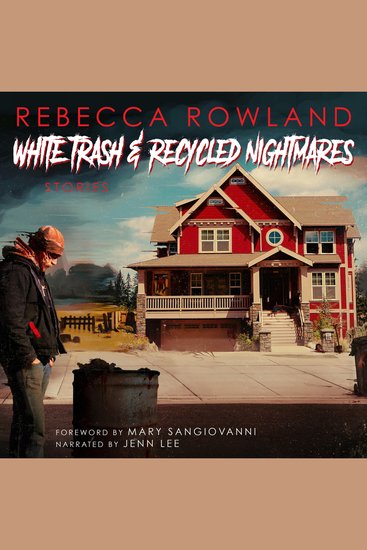
  • White Trash & Recycled Nightmares - cover

    White Trash & Recycled Nightmares

    Rebecca Rowland

    • 0
    • 0
    • 0
    A workaholic splits his time between home and hotel rooms until an anonymous cryptic message arrives, setting off a wrinkle in the time continuum and slowly shredding his sanity. Elsewhere, a woman's jealousy over her spouse's connection with their only child boils over, leading her to see monsters everywhere except the mirror. University fraternity brothers discover that a cruel prank has dire consequences but the full extent of their punishment is yet to come, while an intrepid hiker explores an abandoned Cold War facility hidden within a Massachusetts mountain only to realize that military secrets aren't the only things buried within. From witches, wendigos, and werecats to sirens, sadists, and serial killers, Rebecca Rowland serves readers a twenty-tale meal of cosmic, creature, and quiet horror in platters heaping with unsettling trepidation. In Rowland's long-awaited follow-up to The Horrors Hiding in Plain Sight, a lighted room provides no safe haven, and in the darkest corner of the basement waits a ravenous dread. The most sinister objects of fear are never truly discarded...just repurposed. Includes a foreword by Mary SanGiovanni.
    Show book