Join us on a literary world trip!
Add this book to bookshelf
Grey
Write a new comment Default profile 50px
Grey
Subscribe to read the full book or read the first pages for free!
All characters reduced
The Industrial Revolution - Forging a New World - cover

The Industrial Revolution - Forging a New World

Asif Ahmed Srabon

Publisher: BookRix

  • 0
  • 0
  • 0

Summary

"The Industrial Revolution: Forging a New World" by Asif Ahmed Srabon is a captivating exploration of the transformative era that reshaped societies and economies. This insightful book delves into the technological innovations, societal changes, and economic shifts that defined the Industrial Revolution. With engaging narratives and historical context, it paints a vivid picture of this pivotal period in human history, shedding light on the forces that propelled us into the modern age.
Available since: 09/12/2023.
Print length: 33 pages.

Other books that might interest you

  • A Small Snapshot Of Birds - cover

    A Small Snapshot Of Birds

    Philip Stanworth

    • 0
    • 0
    • 0
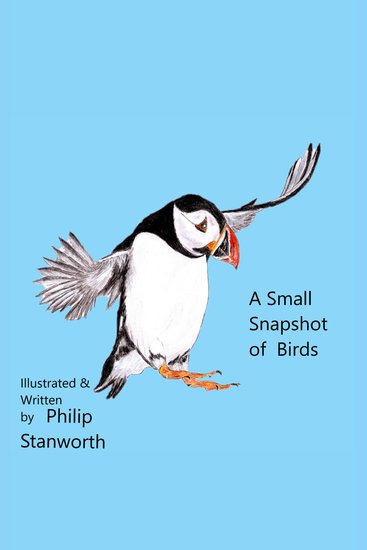
    An educational book for Children or anyone who loves birds lots of differnet birds from all around the world all hand drawn illastrations  
    it tells you a little about each bird perfect for Children as there are lots of pictures and not alot to read. 
    If you are intrested in Birds or if your Child is staring to be intrested this is perfect for Children a starter book to get young Children intrested . 
     
    Show book
  • Desperate to be Loved - Little notes of self-discovery - cover

    Desperate to be Loved - Little...

    Kelly Saward

    • 0
    • 0
    • 0
    A book of hope, of discovery, of love. 
    We all want connection; we all want to feel love. 
    In a desperation to find my ideal version of love, or what I thought it ‘should’ look like, I lost myself for a while there. 
    I became addicted to anxiety; this was my way out. My safety net! Sounds crazy, but true. After quite a journey I started to understand what I was doing, looking for a perfect love in all the wrong places! Discoveries surfacing through writing and meditation. A new mindful way of living, things started to become a little clearer. My days became a little less fearful and my life a little brighter. My faith and connection with love restored. I share with you in this book, what helped me, the magic of feeling love and understanding, that this won’t or can’t look the same to us all. Showing up everyday and trusting what you know holds so much value. 
    Don’t try and change who you are, try and find who you are instead. 
    When anxiety became present with my youngest daughter, I knew I needed to find the tools for her and also myself to be able to deal with our anxiety and create a safe space for us both and not let the anxiety rule our daily lives. 
    We began doing breathing techniques, including the 4-7-8 breathing method, which is one we really enjoy together, you will find this technique in the book and so much more. I hope you enjoy reading it and if you do, please let me know whet you think. 
    There are so many ways to work with me, check out the back of the book or visit my website 'ROOM 478' 
    ‘When we build habits from love, we find ourselves, when we build habits from fear, we lose ourselves.’ - Kelly Saward
    Show book
  • Great American Socialist The: Eugene Debs 1890-1919 - cover

    Great American Socialist The:...

    Eugene Debs

    • 0
    • 0
    • 0
    Six months ago, I had never heard the name Eugene Debs. Today, I believe he is one of the greatest orators in history, ranking alongside Napoleon, Robespierre, Lincoln, and Cicero. More importantly, he was a genuine hero, a man to believe in and follow into the fires of hell. His legacy has been unrightly ignored by the same powers that imprisoned and harassed him over his life. He should be an icon, but is unremembered, for reasons he himself goes into. However, there is one key difference between Debs and these other orators: every one of the others fought for empire, or glory, or democracy – but Debs fought for the working man’s right to a decent existence.A railroad man from 15, he founded then turned against the unions as they became tools of the owners, and won 3% of the presidential vote in 1920 despite being a) the Socialist candidate and b) in prison for sedition. The two major speeches missing from this volume can be found in the prior collection, being “You Railroad Men”, whose content is covered in other speeches herein, and “Statement to the Court”, which is summarised in part 4 of Scott Nearing’s analysis.
    Show book
  • The Rights of Man - cover

    The Rights of Man

    Thomas Paine

    • 0
    • 0
    • 0
    "The Rights of Man" by Thomas Paine is a passionate defence of individual liberty and equality, written in response to Burke’s criticism of the French Revolution. Paine eloquently argues for natural rights, the sovereignty of the people, and social justice. With incisive logic, he advocates for democratic governance and economic inclusivity. This seminal work remains a cornerstone in the discourse on human rights and political reform, resonating across generations.
    Show book
  • The Eurasian Century - Hot Wars Cold Wars and the Making of the Modern Century - cover

    The Eurasian Century - Hot Wars...

    Hal Brands

    • 0
    • 0
    • 0
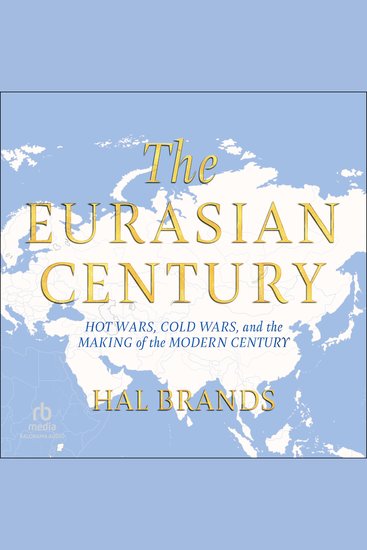
    We often think of the modern era as the age of American power. In reality, we're living in a long, violent Eurasian century. That giant, resource-rich landmass possesses the bulk of the global population, industrial might, and potential military power. Eurasia is a strategic prize without equal—which is why the world has been roiled, reshaped, and nearly destroyed by clashes over the supercontinent. 


    Since the early twentieth century, autocratic powers have aspired for dominance by seizing commanding positions in the world's strategic heartland. Offshore sea powers, namely the United Kingdom and America, have sought to make the world safe for democracy by keeping Eurasia in balance. America's rivalries with China, Russia, and Iran are the next round in this geopolitical game. If this new authoritarian axis succeeds in enacting a radically revised international order, America and other democracies will be vulnerable and insecure. 


    Hal Brands argues that a better understanding of Eurasia's strategic geography can illuminate the contours of rivalry and conflict in today's world. The Eurasian Century explains how revolutions in technology and warfare, and the rise of toxic ideologies of conquest, made Eurasia the center of twentieth-century geopolitics—with pressing implications for the struggles that will define the twenty-first.
    Show book
  • Ancient Egyptian Law and Governance - Systems of Order and Justice - cover

    Ancient Egyptian Law and...

    Omar Khalil

    • 0
    • 0
    • 0
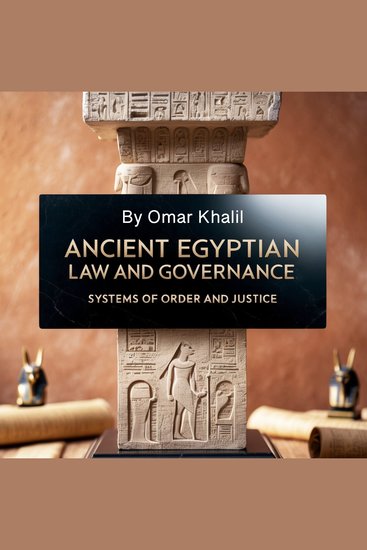
    Ancient Egyptian law was deeply rooted in the concept of Ma’at, the divine order that governed the universe and ensured balance, truth, and justice. This principle was not just a philosophical ideal but a practical guide for governance and social conduct. The legal system in Egypt was designed to maintain harmony within society, regulate disputes, and uphold the authority of the ruling elite. Unlike modern legal frameworks based on written statutes, Egyptian law was a combination of tradition, royal decrees, and religious doctrines. It was adaptable, relying on the wisdom of judges and officials rather than rigid legal codes. 
    The origins of legal traditions in ancient Egypt can be traced back to the early dynastic period when the first centralized state emerged. As society became more complex, a structured system of governance was necessary to manage resources, trade, and interpersonal conflicts. The earliest evidence of legal practice comes from administrative records, tomb inscriptions, and temple documents, which indicate that law was an integral part of daily life. While no single codified legal text has survived, references to decrees issued by pharaohs suggest that laws were issued and enforced at the highest levels of authority. 
    At the heart of Egyptian governance was the role of Ma’at, which extended beyond ethical conduct to legal proceedings. Ma’at represented a cosmic balance that rulers were duty-bound to uphold. The pharaoh, as the earthly representative of the gods, was seen as the ultimate source of justice. His decrees and judgments set legal precedents, shaping the administration of law across the kingdom. This divine connection made Egyptian law unique, as it blended religious principles with practical governance, ensuring that justice was not only a human responsibility but also a sacred duty.
    Show book