
Join us on a literary world trip!
Add this book to bookshelf
Grey
Write a new comment Default profile 50px
Grey
Subscribe to read the full book or read the first pages for free!
All characters reduced
Edge Computing Patterns for Solution Architects - Learn methods and principles of resilient distributed application architectures from hybrid cloud to far edge - cover

Edge Computing Patterns for Solution Architects - Learn methods and principles of resilient distributed application architectures from hybrid cloud to far edge

Ashok Iyengar, Joseph Pearson

Publisher: Packt Publishing

  • 0
  • 0
  • 0

Summary

Enriched with insights from a hyperscaler’s perspective, Edge Computing Patterns for Solution Architects will prepare you for seamless collaboration with communication service providers (CSPs) and device manufacturers and help you in making the pivotal choice between cloud-out and edge-in approaches.This book presents industry-specific use cases that shape tailored edge solutions, addressing non-functional requirements to unlock the potential of standard edge components. As you progress, you’ll navigate the archetypes of edge solution architecture from the basics to network edge and end-to-end configurations. You’ll also discover the weight of data and the power of automation for scale and immerse yourself in the edge mantra of low latency and high bandwidth, absorbing invaluable do's and don'ts from real-world experiences. Recommended practices, honed through practical insights, have also been added to guide you in mastering the dynamic realm of edge computing.By the end of this book, you'll have built a comprehensive understanding of edge concepts and terminology and be ready to traverse the evolving edge computing landscape.
Available since: 01/30/2024.
Print length: 214 pages.
Other books that might interest you

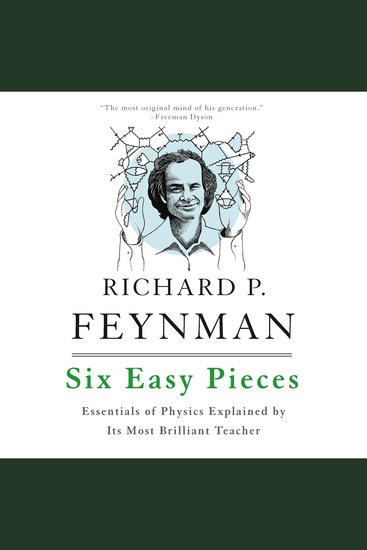
  • Six Easy Pieces - Essentials of Physics Explained by Its Most Brilliant Teacher - cover

    Six Easy Pieces - Essentials of...

    Richard P. Feynman

    • 0
    • 0
    • 0
    Learn how to think like a physicist from a Nobel laureate and "one of the greatest minds of the twentieth century" (New York Review of Books) with these six classic and beloved lessons It was Richard Feynman's outrageous and scintillating method of teaching that earned him legendary status among students and professors of physics. From 1961 to 1963, Feynman delivered a series of lectures at the California Institute of Technology that revolutionized the teaching of physics around the world. Six Easy Pieces, taken from these famous Lectures on Physics, represent the most accessible material from the series. In these classic lessons, Feynman introduces the general reader to the following topics: atoms, basic physics, energy, gravitation, quantum mechanics, and the relationship of physics to other topics. With his dazzling and inimitable wit, Feynman presents each discussion with a minimum of jargon. Filled with wonderful examples and clever illustrations, Six Easy Pieces is the ideal introduction to the fundamentals of physics by one of the most admired and accessible physicists of modern times. "If one book was all that could be passed on to the next generation of scientists it would undoubtedly have to be Six Easy Pieces."- John Gribbin, New Scientist
    Show book
  • 101 Flight Lessons - Private Pilot Licence - cover

    101 Flight Lessons - Private...

    Facundo Conforti

    • 0
    • 0
    • 0
    This audiobook is narrated by an AI Voice.   
    The collection "101 Flight Lessons" has been created to cover the main theoretical concepts of the most relevant aeronautical subjects at each stage of a pilot, air traffic controller, and cabin crew career. 
    	101 Flight Lessons for Private Pilots" includes a summary of key aeronautical topics such as meteorology, aerodynamics, flight instruments, maneuvers, aircraft structures, engines, regulations, airports, and a set of lessons that every private pilot, whether in training or already graduated, should always keep in mind. 
    	This work is dedicated not only to all aviation personnel in general but also to aviation enthusiasts who enjoy a pleasant read for recreational and educational purposes. 
    	This work is dedicated not only to all aviation personnel in general but also to aviation enthusiasts who enjoy a pleasant read for recreational and educational purposes.
    Show book
  • Lost Wonders - 10 Tales of Extinction from the 21st Century - cover

    Lost Wonders - 10 Tales of...

    Tom Lathan

    • 0
    • 0
    • 0
    Read by the author, Tom Lathan.In Lost Wonders author and journalist Tom Lathan tells the powerful stories of ten species that have lived, died out and been declared extinct since the turn of the twenty-first century.Many scientists believe that we are currently living through the Earth’s sixth mass extinction, with species disappearing at a rate not seen for tens of millions of years – a trend that will only accelerate as climate change and other pressures intensify. What does it mean to live in such a time? And what exactly do we lose when a species goes extinct?In a series of fascinating encounters with subjects that are now nowhere to be found on Earth – from giant tortoises to minuscule snails the size of sesame seeds, from ocean-hopping trees to fish that wag their tails like puppies – Lathan brings these lost wonders briefly back to life and gives us a tantalising glimpse of what we have lost within our own lifetime.Drawing on the personal recollections of the people who studied these species, as well as those who tried but ultimately failed to save them, Lost Wonders is an intimate portrait of the species that have only recently vanished from our world and an urgent warning to hold on all the more tightly to those now slipping from our grasp.
    Show book
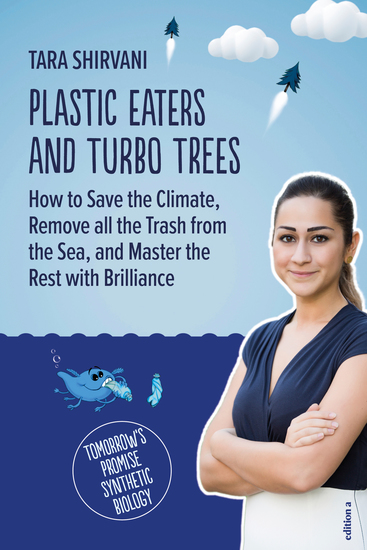
  • Plastic Eaters and Turbo Trees - How to Save the Climate Remove all the Trash from the Sea and Master the Rest with Brilliance - cover

    Plastic Eaters and Turbo Trees -...

    Tara Shirvani

    • 0
    • 0
    • 0
    Trees that bind ten times more CO2 than those previously known or bacteria that simply eat up the plastic floating in the sea: Synthetic biology is one of the great opportunities to save the world. Tara Shirvani portrays this young scientific discipline that is fundamentally changing all of our lives in an exciting and easy-to-understand manner. It shows what benefits we can all derive from it now.
    Show book
  • Salmonella - A Comprehensive Guide to the Microbial Menace - cover

    Salmonella - A Comprehensive...

    Lilly Richardsen

    • 0
    • 0
    • 0
    Salmonella is a genus of bacteria that plays a major role in human and animal health, causing a wide range of infections with varying degrees of severity. It is responsible for one of the most common foodborne illnesses worldwide, with millions of people affected each year. While many may associate Salmonella solely with food poisoning, it is much more complex, comprising over 2,500 serotypes, each with its own specific characteristics and virulence factors. 
    The discovery of Salmonella dates back to the late 19th century, when Theobald Smith, working under the guidance of American bacteriologist Daniel Elmer Salmon, first identified the bacterium. Since then, much has been learned about its biology, transmission, and impact on public health. Originally, the genus was named after Salmon, though today it is classified under the family Enterobacteriaceae, sharing common traits with other enteric bacteria. Despite the significant advances in understanding Salmonella, new challenges continue to emerge, particularly in the form of antibiotic resistance and emerging serotypes with more aggressive characteristics. 
    Salmonella infections are typically categorized into two main types: gastrointestinal infections and systemic infections. The most common manifestation is gastroenteritis, which presents with symptoms such as diarrhea, fever, nausea, and abdominal cramps. These symptoms usually develop within 6 to 72 hours after exposure to the bacteria. Though often self-limiting, severe cases can lead to dehydration and, in rare instances, death. On the other hand, systemic infections like typhoid fever can cause more severe illness, potentially leading to complications such as intestinal perforation, septic shock, or organ failure. Typhoid fever remains a major health issue in many developing countries, while gastrointestinal Salmonella infections are more frequently encountered in industrialized nations.
    Show book
  • Unlocking Hidden Patterns: The Art of Data Interpretation - Empowering Decisions with Analytical Precision - cover

    Unlocking Hidden Patterns: The...

    Rachel Thompson

    • 0
    • 0
    • 0
    Data isn’t just numbers — it’s a map to the future. 
    In Unlocking Hidden Patterns: The Art of Data Interpretation, Rachel Thompson reveals how to transform raw data into insights that drive smarter decisions, sharper strategies, and lasting competitive advantage. 
    Inside this audiobook, you’ll discover:Data Fundamentals: Core principles and techniques for interpreting complex datasets with clarity.Pattern Recognition and Predictive Analytics: Methods to spot trends early and make accurate forecasts.Decision-Making Tools: Proven frameworks to convert data into actionable strategies.Real-World Applications: From business to personal finance, see how data powers decisions every day.The Data Thinker’s Mindset: Build confidence, reduce errors, and strengthen analytical intuition. 
    Whether you’re just beginning your journey into data or seeking to sharpen your expertise, this audiobook equips you with the tools to make data work for you. Instead of being overwhelmed, you’ll learn to see what others miss — and use it to shape smarter outcomes. 
    Unlocking Hidden Patterns is your essential guide to mastering the art of data interpretation and building a future defined by insight and precision.
    Show book