
Rejoignez-nous pour un voyage dans le monde des livres!
Ajouter ce livre à l'électronique
Grey
Ecrivez un nouveau commentaire Default profile 50px
Grey
Abonnez-vous pour lire le livre complet ou lisez les premières pages gratuitement!
All characters reduced
Arthur Conan Doyle: The Complete Sherlock Holmes - cover

Arthur Conan Doyle: The Complete Sherlock Holmes

Arthur Conan Doyle, Classics HQ

Maison d'édition: Icarsus

  • 0
  • 0
  • 0

Synopsis

Sherlock Holmes is a fictional detective of the late 19th and early 20th centuries, who first appeared in publication in 1887. He is the creation of Scottish born author and physician Sir Arthur Conan Doyle. A brilliant London-based detective, Holmes is famous for his intellectual prowess, and is renowned for his skillful use of deductive reasoning (somewhat mistakenly - see inductive reasoning) and astute observation to solve difficult cases. He is arguably the most famous fictional detective ever created, and is one of the best known and most universally recognizable literary characters in any genre.

Conan Doyle wrote four novels and fifty-six short stories that featured Holmes. All but four stories were narrated by Holmes' friend and biographer, Dr. John H. Watson, two having been narrated by Holmes himself, and two others written in the third person. The first two stories, short novels, appeared in Beeton's Christmas Annual for 1887 and Lippincott's Monthly Magazine in 1890. The character grew tremendously in popularity with the beginning of the first series of short stories in The Strand Magazine in 1891; further series of short stories and two serialized novels appeared almost right up to Conan Doyle's death in 1930. The stories cover a period from around 1878 up to 1903, with a final case in 1914.

This collection contains all the 60 official and the 6 unofficial Sherlock Holmes stories - in total 66 works (the biggest and greatest Sherlock Holmes collection in the eBook world).

• A Study in Scarlet
• The Sign of the Four
• The Hound of the Baskervilles
• The Valley of Fear Short Story Collections:
• The Adventures of Sherlock Holmes
• The Memoirs of Sherlock Holmes
• The Return of Sherlock Holmes
• His Last Bow
• The Casebook of Sherlock Holmes
Disponible depuis: 08/08/2022.
Longueur d'impression: 1300 pages.

D'autres livres qui pourraient vous intéresser

  • A Room of One's Own - cover

    A Room of One's Own

    Virginia Woolf

    • 0
    • 0
    • 0
    Virginia Woolf’s A Room of One’s Own is a timeless and thought-provoking exploration of the relationship between women and creativity. Based on a series of lectures delivered at Cambridge University in 1928, this seminal work blends sharp wit, eloquence, and intellectual rigor to examine the systemic barriers that have historically denied women the opportunity to achieve their artistic potential. 
    Woolf argues that for women to write—and to thrive—they require financial independence and personal space, both literally and figuratively. Through vivid prose and compelling insights, she interrogates the social and cultural constraints placed on women and challenges readers to consider the enduring impact of inequality on art and literature. 
    More than a call to action, A Room of One’s Own is a celebration of the resilience of women writers and a rallying cry for the creation of a world where every voice can be heard. Profoundly relevant today, this masterpiece remains an essential read for anyone interested in gender, creativity, and the power of storytelling.
    Voir livre
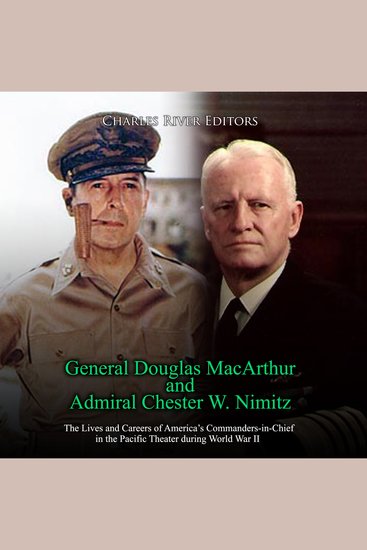
  • General Douglas MacArthur and Admiral Chester W Nimitz: The Lives and Careers of America’s Commanders-in-Chief in the Pacific Theater during World War II - cover

    General Douglas MacArthur and...

    Editors Charles River

    • 0
    • 0
    • 0
    Despite fighting in North Africa and the Atlantic, the United States still had the resources and manpower to fight the Japanese in the Pacific. Though the Japanese had crippled the American fleet at Pearl Harbor, its distance from Japan made an invasion of Pearl Harbor impossible, and Japan had not severely damaged important infrastructure. Thus, the United States was able to quickly rebuild a fleet, still stationed at Pearl Harbor right in the heart of the Pacific. This forward location allowed the United States to immediately push deeply into the Pacific theater. 
    The Americans would eventually push the Japanese back across the Pacific, and one of the most instrumental leaders in the effort was Admiral Chester W. Nimitz, who commanded the U.S. Pacific Fleet and helped coordinate joint operations with the legendary General Douglas MacArthur, the Supreme Commander, Southwest Pacific Area. 
    Today, Nimitz’s name doesn’t ring as many bells as his counterpart’s, because of all the military men America produced during the 19th and 20th centuries, it’s hard to find one as important, successful, and controversial as General MacArthur. The son of a Civil War veteran, MacArthur rose to become the most instrumental commander in the Pacific Theater during World War II. His legendary return to the Philippines in 1944 made good on one of the war’s most famous vows, and it was MacArthur who fittingly oversaw the occupation and reconstruction of Japan following the war. 
    Given his long and celebrated career, MacArthur was the obvious choice to lead the newly created United Nations’ troops during the Korean War, but his arguments over war strategy and policy eventually led to his controversial firing by President Harry Truman in 1951. After that, in his own words, he “faded away,” living out his remaining days on the top floor of the Waldorf Hotel until his death in 1964. 
    Voir livre
  • Summary of Counter Gaslighting - A small manual of Counter-manipulation - cover

    Summary of Counter Gaslighting -...

    Dan Crown

    • 0
    • 0
    • 0
    In a world where psychological well-being is paramount, understanding the nuances of manipulative behaviors is crucial. One of the most insidious forms of manipulation is gaslighting. This chapter delves deep into the definition of gaslighting, aiming to equip you with the knowledge to identify and protect yourself from this covert form of emotional abuse. 
    What is Gaslighting? 
    Gaslighting is a form of psychological manipulation in which a person or a group covertly sows seeds of doubt in a targeted individual or group, making them question their own memory, perception, or judgment. It often leads to significant emotional distress, confusion, and a diminished sense of self-worth in the victim. 
    The Core Elements of Gaslighting 
    -Doubt: The manipulator's primary tool is doubt. By questioning the validity of the victim's memories or perceptions, the manipulator creates uncertainty. 
    -Denial: Despite evidence to the contrary, the gaslighter will deny behaviors or events, further confusing the victim. 
    -Discredit: The gaslighter may also discredit the victim to others, isolating the victim and undermining their support system. 
    -Dependency: Over time, the victim may become dependent on the gaslighter for their version of reality, eroding the victim's ability to trust their own judgment.
    Voir livre
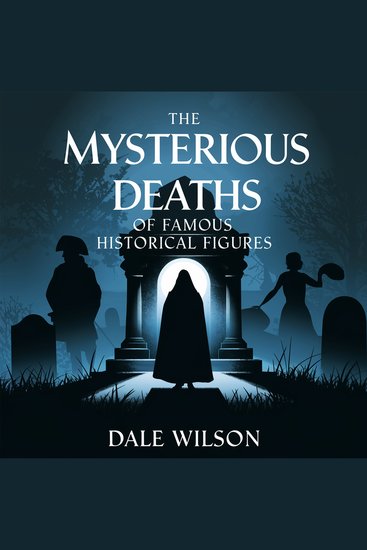
  • The Mysterious Deaths of Famous Historical Figures - Unsolved Cases Strange Circumstances and Conspiracies from History - cover

    The Mysterious Deaths of Famous...

    Dale Wilson

    • 0
    • 0
    • 0
    From emperors to poets, some of history’s most influential figures met their end under strange, suspicious, or unexplained circumstances. Were they victims of foul play, secret assassinations, or just tragic coincidences? 
    This audiobook explores declassified documents, historical accounts, and forensic evidence to uncover the truth behind Napoleon’s poisoning rumors, the bizarre final days of Edgar Allan Poe, the mysterious death of Tutankhamun, and many more. 
    The Mysterious Deaths of Famous Historical Figures is a must-listen for history lovers, conspiracy theorists, and true crime fans who love unraveling history’s greatest puzzles.
    Voir livre
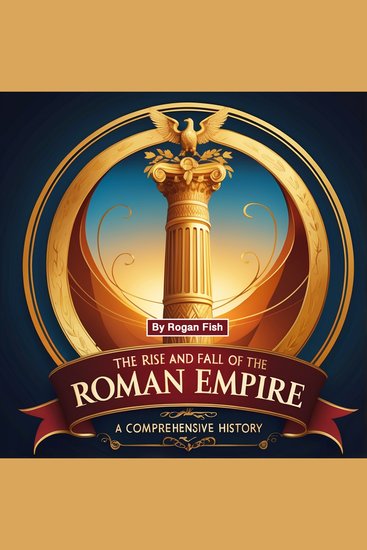
  • The Rise and Fall of the Roman Empire - A Comprehensive History - cover

    The Rise and Fall of the Roman...

    Rogan Fish

    • 0
    • 0
    • 0
    The founding of Rome is one of the most famous legends in history, blending myth and reality to shape the origins of one of the greatest civilizations of the ancient world. According to Roman tradition, the city was established in 753 BCE by Romulus, the first king of Rome, after he and his twin brother, Remus, were rescued and raised by a she-wolf. This tale, passed down through generations, symbolized Rome’s strength, resilience, and divine favor. While the legend is deeply ingrained in Roman identity, historians believe the city’s origins were more complex, involving the gradual unification of Latin and Etruscan tribes. 
    The early formation of Rome was influenced by its strategic location along the Tiber River. The site provided access to trade routes, fresh water, and natural defenses, making it an ideal settlement for early inhabitants. Archaeological evidence suggests that small villages existed in the area long before Rome’s legendary founding, with early settlers engaging in agriculture, trade, and warfare. These early communities gradually coalesced, forming a unified society under a monarchical system. The first rulers of Rome were part of the Roman Kingdom, a period that saw the development of political institutions, religious practices, and military organization that would shape the city’s future. 
    Roman society during its early years was structured around family and clan-based systems, with the patricians, or aristocratic families, holding the majority of political power. The king was the central authority, responsible for religious duties, military leadership, and lawmaking. However, his rule was supported by a council of elders known as the Senate, which played an advisory role. Over time, tensions arose between the patricians and the common people, or plebeians, who sought greater political representation. These early power struggles foreshadowed the later conflicts that would lead to the transition from monarchy to a republic.
    Voir livre
  • UNLOCKING THE POWER OF SOCIAL INTERACTION - Enhance Your Social Skills Forge Authentic Connections and Flourish in Every Interaction (2024) - cover

    UNLOCKING THE POWER OF SOCIAL...

    CHRISTOPHER GORDON

    • 0
    • 0
    • 0
    "Unlocking the Power of Social Interaction" is your key to mastering the art of connection, offering practical insights and actionable strategies to elevate your social skills and thrive in diverse social settings. This comprehensive guide empowers you to cultivate authentic relationships, enhance communication, and leave a positive impact in both personal and professional spheres.Effective Communication Techniques: Learn to express yourself with clarity, active listening, and empathy for more meaningful conversations.Body Language Mastery: Unlock the secrets of non-verbal communication, using gestures and expressions to convey confidence and sincerity.Building Rapport: Develop the skills to connect effortlessly with others, fostering trust and camaraderie in various social contexts.Navigating Social Challenges: Overcome social anxiety, handle conflicts diplomatically, and navigate diverse social situations with ease.Networking and Relationship Building: Discover strategies for successful networking, creating lasting connections that open doors to opportunities.Digital Etiquette: Navigate the intricacies of online communication and social media, building a positive digital presence. 
    🌟 Ready to transform your social interactions and leave a lasting impression? Dive into "Unlocking the Power of Social Interaction" and discover the keys to building meaningful connections, both online and offline. Whether you're seeking to excel in your professional life, build a vibrant social circle, or simply connect more authentically with others, this guide provides the roadmap to social mastery. Elevate your social skills—start unlocking the power today! 🌟 
     
    Voir livre