Begleiten Sie uns auf eine literarische Weltreise!
Buch zum Bücherregal hinzufügen
Grey
Einen neuen Kommentar schreiben Default profile 50px
Grey
Jetzt das ganze Buch im Abo oder die ersten Seiten gratis lesen!
All characters reduced
Aristotle's Complete Works - The Foundations of Western Philosophy and Science - cover

Aristotle's Complete Works - The Foundations of Western Philosophy and Science

Aristotle, Zenith Crescent Moon Press

Verlag: Zenith Crescent Moon Press

  • 0
  • 0
  • 0

Beschreibung

Embark on an intellectual journey with "Aristotle's Complete Works" 🧠✨—the definitive collection of writings by one of the greatest thinkers in history. As the father of Western philosophy and science, Aristotle's groundbreaking ideas continue to shape our understanding of the world even after two millennia 🌍📖.
⚖️ Explore profound works on ethics, politics, and metaphysics, where Aristotle ponders the principles of justice, virtue, and the nature of reality. Delve into the origins of scientific inquiry 🔬, uncover Aristotle's theories on biology, astronomy, and logic, and experience his timeless lessons on rhetoric and poetics 🎭.
🌟 This comprehensive collection is an invaluable resource for philosophers, students, and anyone with a thirst for knowledge. Discover why Aristotle's works have been a cornerstone of intellectual development and an inspiration for some of history's greatest minds 💡.
📚 Take a step back in time to the foundations of knowledge. Add this unparalleled collection of Aristotle's works to your library and experience the brilliance of a truly timeless genius. 🌌✨
Verfügbar seit: 21.03.2025.
Drucklänge: 1817 Seiten.


Weitere Bücher, die Sie mögen werden

  • Hidden Agendas - Secret Motives behind Outward Behavior or Actions - cover

    Hidden Agendas - Secret Motives...

    Cito Harder

    • 0
    • 0
    • 0
    Hidden agendas exist in nearly every aspect of life, shaping decisions, influencing behavior, and often determining the outcomes of interactions without those involved fully realizing it. A hidden agenda refers to a concealed motive or underlying intention that differs from what is outwardly expressed. Unlike open and transparent objectives, hidden agendas operate beneath the surface, often serving personal, financial, or strategic interests that are not explicitly stated. 
    At their core, hidden agendas stem from the fundamental human need for control, advantage, or self-preservation. People may withhold their true intentions out of fear of rejection, loss of power, or diminished influence. In many cases, hidden agendas are not inherently malicious; they can be driven by self-interest, strategic planning, or the need to protect sensitive information. However, when used manipulatively, they can undermine trust, deceive others, and lead to unethical or harmful consequences. 
    One of the key characteristics of a hidden agenda is deception or misdirection. A person or group may present one set of intentions while secretly pursuing another. This is common in politics, business, and even personal relationships, where individuals may disguise their true motivations to gain support, manipulate outcomes, or secure an advantage. For example, a corporate leader advocating for a policy change may claim it is for the benefit of employees, while in reality, it serves to increase profits or consolidate power.
    Zum Buch
  • The Great Irish Famine - cover

    The Great Irish Famine

    Cathal Poirteir

    • 0
    • 0
    • 0
    This is the most wide-ranging series of essays ever published on the Great Irish Famine, and will prove of lasting interest to the general reader. Leading historians, economists and geographers – from Ireland, Britain and the United States – have assembled the most up-to-date research from a wide spectrum of disciplines including medicine, folklore and literature, to give the fullest account yet of the background and consequences of the Famine. Contributors include Dr Kevin Whelan, Professor Mary Daly, Professor James Donnelly and Professor Cormac Ó Gráda. The Great Irish Famine was the first major series of essays on the Famine published in Ireland for almost fifty years.
    Zum Buch
  • The Estates-General - Impact on the French Revolution - cover

    The Estates-General - Impact on...

    Amara Blackwood

    • 0
    • 0
    • 0
    The Estates-General was a fundamental institution in France before the Revolution, deeply rooted in the country’s medieval past. It played a crucial role in shaping the power dynamics between the monarchy, the nobility, the clergy, and the common people. To understand its significance, it is essential to explore the feudal system, the structure of the three estates, and how previous assemblies influenced its development. 
    France’s political and social system before the Revolution was built upon a rigid hierarchy known as the Ancien Régime. At the top sat the king, whose authority was believed to be divinely ordained. Below him were three distinct social classes, or “estates.” The First Estate consisted of the clergy, who controlled vast amounts of land and held considerable influence over religious and moral matters. The Second Estate was composed of the nobility, a privileged class that enjoyed exemptions from many taxes and held key positions in the military and government. The Third Estate, the largest and most diverse, included commoners ranging from wealthy merchants to poor peasants. This estate bore the brunt of taxation and had little political power, despite representing the majority of the population. 
    The Estates-General was an assembly designed to bring representatives from all three estates together to advise the king on financial and political matters. However, unlike England’s Parliament, it did not function as a legislative body with regular meetings. Instead, it was convened only at the discretion of the monarch, typically in times of crisis. This irregularity in its use meant that its influence remained limited, as kings preferred to rule without its interference. Nevertheless, the Estates-General provided a forum where grievances could be voiced, and it occasionally pressured the monarchy into making concessions.
    Zum Buch
  • A Comic History Of Rome - A Wry Journey From the Wolf-Sucking Start to the Farcical Dictator Face-Off of History's Favorite Oligarchic Republic - cover

    A Comic History Of Rome - A Wry...

    Gilbert Abbott A'Beckett

    • 0
    • 0
    • 0
    Forget dusty textbooks and noble senators. The real history of Rome is a chaotic, blood-soaked circus of power-crazed maniacs, backstabbing politicians, and enough megalomaniacs in togas to outfit a farce. 
    Behind the marble pillars and glittering triumphs lay a world of two-faced demagogues and ruthless ambition. Gilbert Abbott A Beckett’s legendary Comic History of Rome drags the Eternal City’s glorious past into the gloriously witty gutter where it belongs. 
    This is history as the finest form of satire. Witness the original sibling rivalry between Romulus and Remus, which ended—like so much in Rome—in betrayal. From the daring escape of Cloelia from the Etruscan camp to the grim reality of the gladiatorial arena, no sacred cow is left unskewered. A Beckett’s narrative, both “compendious and correct,” guides you through the chaos with dry, avuncular wit, suggesting we take the reign of Romulus with “an entire cellar of salt.” 
    Now, listen as the venerable figures of antiquity are revived in all their farcical glory: eavesdrop on the Senate’s petty squabbles, follow Hannibal’s troublesome Alpine holiday, and endure the terrible poetry and even worse governance of Emperor Nero. The original illustrations are vividly brought to life through the narrator's sharp performance, preserving the unique charm of this classic. 
    So, don your metaphorical laurel wreath and ready your laughter. This audiobook invites you to experience the hilarious rise and fall of an empire—a story far richer, and funnier, than any textbook would ever dare admit.
    Zum Buch
  • Meditation Means a Life That is Totally Different Every Minute of the Day - Santa Monica 1971 - Public Talk 4 - cover

    Meditation Means a Life That is...

    Jiddu Krishnamurti

    • 0
    • 0
    • 0
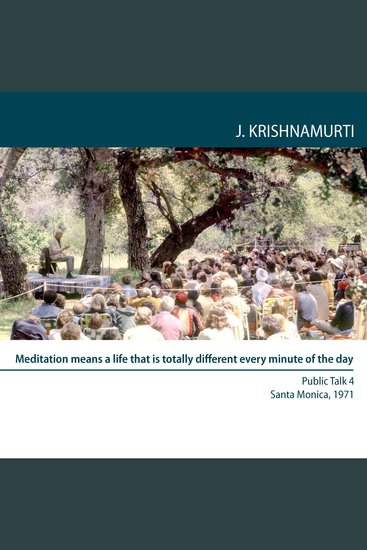
    Meditation means a life that is totally different every minute of the day - 14 March 1971 
    • A mind that inquires into this whole question of meditation must have 
    tremendous discipline. 
    • When you observe‘what is’without the interference of the past, there is 
    complete change of ‘what is’. 
    • Is there a way of seeing the whole content of consciousness without analysis? 
    • When you give complete attention there is no centre from which you attend. 
    • The word ‘innocence’means a mind that is never hurt, scarred. 
    • Meditation is the sense of complete silence and quietness of the mind. 
    Question topics following the talk include: gurus, meditation, effort, escaping from ‘what is’.
    Zum Buch
  • Anglo-Ashanti Wars The: The History and Legacy of the Conflicts Between the British and the Ashanti Empire in Africa - cover

    Anglo-Ashanti Wars The: The...

    Editors Charles River

    • 0
    • 0
    • 0
    By the mid-19th century, other European powers became interested not only in the exploration of Africa but the exploitation of it, especially once the German Empire unified after the Franco-Prussian War. This began a rush, spearheaded mainly by European commercial interests in the form of chartered companies, to penetrate the African interior and woo its leadership with guns, trinkets and alcohol, and having thus obtained their marks or seals upon spurious treaties, begin establishing boundaries of future European colonies. The ease with which this was achieved was due to the fact that, at that point, traditional African leadership was disunited, and the people had just staggered back from centuries of concussion inflicted by the slave trade. Thus, to usurp authority, to intimidate an already broken society, and to play one leader against the other was a diplomatic task so simple, much of Africa would come under European influence in a short time.  
    	Of course, there were exceptions to this rule, and for almost a century, the British in West Africa were faced with a powerful and stubborn African opponent: the Ashanti Empire. The Ashanti were formed by alliance and the conquest of the Akan people in the rainforest zone between the West African coast and the Sahel country to the north. 
    	The Ashanti fought the British in five wars over the nineteenth century, and they were the only West African people inflicting more than one defeat on the British. War in tropical West Africa was different from most of the rest of the world. The prevalence of endemic diseases like malaria typically killed half of the Europeans posted there per year; it was called “The White Man’s Grave” for a reason. A second factor was the presence of the tsetse fly that carried a disease able to kill horses quickly. Military expeditions were left to move entirely on foot - there were no carts, no wagons, no pack animals, and no cavalry. 
    Zum Buch