Rejoignez-nous pour un voyage dans le monde des livres!
Ajouter ce livre à l'électronique
Grey
Ecrivez un nouveau commentaire Default profile 50px
Grey
Abonnez-vous pour lire le livre complet ou lisez les premières pages gratuitement!
All characters reduced
Popol Vuh - cover

Popol Vuh

Anonyme

Maison d'édition: Passerino

  • 0
  • 0
  • 0

Synopsis

The Popol Vuh is a foundational text of Maya culture and literature, often referred to as the "Book of the Council" or "Book of the Community." It is one of the most important historical sources for understanding the beliefs, mythology, and history of the Kʼicheʼ Maya people, who inhabited the highlands of present-day Guatemala.

The Popol Vuh does not have a single, identifiable author in the conventional sense. Instead, it is a product of the collective oral traditions of the Kʼicheʼ Maya.
Disponible depuis: 06/12/2024.

D'autres livres qui pourraient vous intéresser

  • Odin's Omens - Reading Nature Through Viking Eyes - cover

    Odin's Omens - Reading Nature...

    Dr John Sorensen

    • 0
    • 0
    • 0
    "Odin's Omens: Reading Nature Through Viking Eyes" invites you on a captivating journey through the mystical world of the Vikings. Discover how they interpreted nature's signs and harnessed its wisdom for guidance and insight. This rich exploration intertwines history, religion, and mythology to unveil the deep connection between the Norse people and their environment. Learn practical tips for integrating Viking traditions into modern life, from interpreting animal behavior to creating sacred spaces. As ancient practices meet modern spirituality, embark on a journey to rediscover nature's lost wisdom. Join us in listening to the whispers of the gods in the rustling leaves and flowing rivers. Are you ready to see the world anew through Viking eyes?
    Voir livre
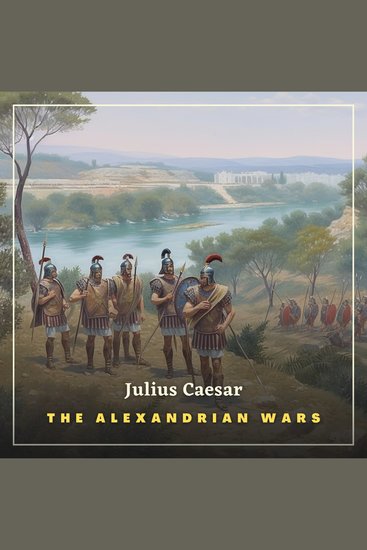
  • The Alexandrian Wars - cover

    The Alexandrian Wars

    Julius Caesar

    • 0
    • 0
    • 0
    The Alexandrian Wars, fought by Julius Caesar between 48 and 47 BCE, are of immense historical significance. They marked the culmination of Caesar's time in Egypt, as well as a shift in the Roman Empire's relations with the region. The Alexandrian Wars saw an impressive display of military prowess by Caesar and his legions, who were ultimately successful in their mission to annex Alexandria and its surrounding territories into the growing Roman Empire. Read in English, unabridged.
    Voir livre
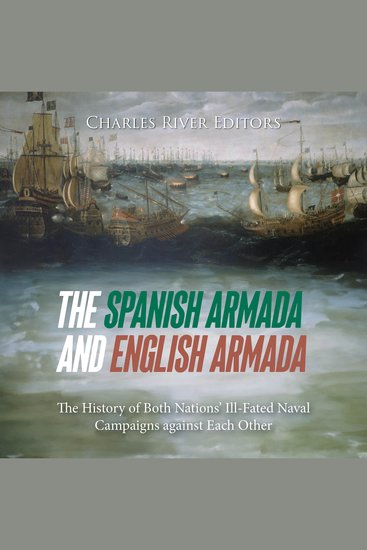
  • Spanish Armada and English Armada The: The History of Both Nations’ Ill-Fated Naval Campaigns against Each Other - cover

    Spanish Armada and English...

    Editors Charles River

    • 0
    • 0
    • 0
    On July 12, 1588, the legendary Spanish Armada headed for the English Channel. The Spanish plan was to take this invasion, led by the Duke of Parma, to the coast of southeast England, where they would be unleashed to conquer Elizabethan England for Spain’s King Philip II and Catholic Christendom. The Armada included over 150 ships, 8,000 sailors, and 18,000 soldiers, and it boasted a firepower of 1,500 brass guns and 1,000 iron guns. Just leaving port itself took the entire Armada two days.  
    	As everyone who has been taught history now knows, the Armada was one of the most famous military debacles in history. Regardless of the debate over whether it was simple mathematical miscalculation or plain bad luck, coupled with English fire ships assailing the Spanish ships, the Armada was decisively defeated. The Armada ultimately found its reluctant way home in awful conditions, having permanently lost over a third of the ships, and on the Irish coast, the Armada suffered further losses.  
    	What has since been overlooked is that the undeclared Anglo-Spanish War continued, and it would do so until 1604. The English and their Dutch allies responded to the spectacular and unexpected defeat of the Armada with an attempt of their own to attack Spain with a fleet often called the "Counter Armada" in English. In 1589, once the impact of the previous year upon the Hapsburg naval power became clear, Elizabeth ordered Drake to gather the English fleet to take advantage of the situation. Unlike the Spanish, the English had no illusions of being able to invade their opponent's homelands and overthrow their state; instead, the English had far more modest goals. The English wanted to seek out the remainder of the Spanish fleet and burn it, land troops in Portugal and raise a revolution in that country, and capture the Azores Islands. If possible, they would use a base in the Azores to capture the anticipated treasure fleet from the New World. 
    Voir livre
  • People and Society in Scotland 1830–1914 - cover

    People and Society in Scotland...

    W. Hamish Fraser, R. J. Morris

    • 0
    • 0
    • 0
    This is the second volume of a three-volume study of Scottish social change and development from the eighteenth century to the present day, originally published by John Donald in association with the Economic and Social History Society of Scotland.  The series covers the history of industrialisation and urbanisation in Scottish society and records many experiences which Scotland shared in common with other societies, looking at the impact of those changes throughout the spectrum of society from croft, bothy and hunting lodge to mines, foundries and urban poor houses.  The series is intended to illustrate the identity and distinctiveness of Scotland through its separate institutions and through areas such as language, law and religion and recognises Scotland as a multi-cultured society, the highland and lowland cultures being only two among several.
    Voir livre
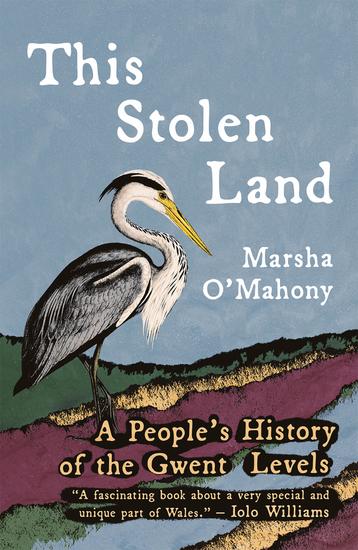
  • This Stolen Land - A People's History of the Gwent Levels - cover

    This Stolen Land - A People's...

    Marsha O'Mahony

    • 0
    • 0
    • 0
    The Gwent Levels line the north shore of the Severn Estuary in South Wales: Chepstow at their head; their more famous cousin, the Somerset Levels, across the water; the Welsh capital, Cardiff at their feet. You could waste an hour crossing the Levels by motorway. Or brush aside the journey by train. But writer Marsha O'Mahony has chosen the slow route of foreshore, footpath, and country lane. Over the course of two years, she meandered from village to village collecting conversations and anecdotes as she went. The result is a remarkable oral and social history of this unique landscape and the people who live there.
    Voir livre
  • State of the Union 1982 - cover

    State of the Union 1982

    Ronald Reagan

    • 0
    • 0
    • 0
    In the 1982 State of the Union address on January 26, 1982, Reagan invokes his self-deprecating humor and calls for “a new spirit of partnership between this Congress and this administration”. Reagan cites the “stagflation” of the 1970s: double digit inflation, interest rates over 21%, and over 8 million unemployed.  
    Reagan notes economic improvement and calls for reduced federal spending, further tax reductions, and fewer regulations, saying our economic problems “are the inheritance of decades of tax and tax and spend and spend.”  
    Reagan calls for dismantling the Departments of Energy and Education but keeping a reliable safety net for those in need by rooting out waste and fraud in the food stamp, Medicare, and Medicaid programs. Reagan decries the growth in federal grant programs to state and local governments and calls for major reforms. 
    A short paragraph was lost at 23:15 of the Ronald Reagan presidential library recording. The missing words can be seen in the text version. 
    In meetings with foreign leaders, Reagan “spoke of the strength of the free marketplace system and how that system could help them realize their aspirations for economic development and political freedom.” Reagan endorses sanctions against the Soviet Union for its actions in Poland and Afghanistan, and urges “that we rebuild our defenses.”  
    Reagan concludes with a call to work together to preserve “the sacred flame of liberty -- this last, best hope of man on Earth.” This address followed the assassination attempt and the applause at the start and end was extensive.
    Voir livre