Join us on a literary world trip!
Add this book to bookshelf
Grey
Write a new comment Default profile 50px
Grey
Subscribe to read the full book or read the first pages for free!
All characters reduced
The Hindu Bard - The Poetry of Dorothy Bonarjee - cover

The Hindu Bard - The Poetry of Dorothy Bonarjee

Andrew Whitehead, Mohini Gupta

Publisher: Honno Press

  • 0
  • 0
  • 0

Summary

The first print collection of Dorothy Bonarjee's verse

In February 1914, Dorothy 'Dorf' Bonarjee was awarded the Bardic chair at the UCW Eisteddfod for verse. She was the first woman and first non-European to win Wales' most prestigious literary prize.

In their 34th Welsh Women's Classic, Honno Welsh Women's Press presents the first publication of Dorothy Bonarjee's verse alongside a vivid account of the poet's extraordinary life in India, London, Wales and France.

Poet Dorothy 'Dorf' Bonarjee was born in India in 1894 into an elite Bengali family. As a child, she moved to London and in 1912 she enrolled at the University College of Wales at Aberystwyth. Two years later, she was awarded the Bardic chair at the Eisteddfod, and went on to publish poems in Welsh journals. Bonarjee later took a law degree at the University of London and eloped with a French artist. France remained her home for the rest of her life.
Available since: 02/23/2023.
Print length: 104 pages.

Other books that might interest you

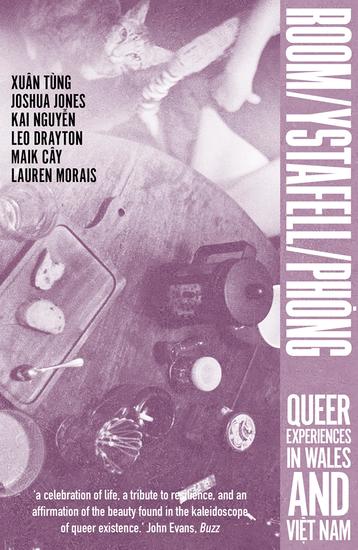
  • Room Ystafell Phòng - cover

    Room Ystafell Phòng

    Joshua Jones, Kai Nguyễn, Xuân...

    • 0
    • 0
    • 0
    Six writers, three from Việt Nam and three from Wales come together in the Room/Ystafell/Phòng to discuss their queer identities and how it has been shaped by world around them. Featuring discussion transcripts, poetry, photography, collages and prose.
    A man takes to the ballroom scene after months of lockdown in Há Nội, entranced by the vogue gods. An 81 year old lesbian artist writes to her ex-lovers daughter to explore her ten strange dreams. At 2am a young woman strides through Queen Street, Cardiff writing love notes to her cariad. Exploring sexuality, love and loss, language, cultural heritage, nature and joy this anthology sheds light on the queer experience in Wales and Việt Nam.
    Show book
  • Remotely Annoying - cover

    Remotely Annoying

    Larry Enright

    • 0
    • 0
    • 0
    This 1 hour, 3 actor, 3 scene comedy is meant to be enjoyed with friends around the dinner table after a good meal and plenty of libations.  
    The premise: The two main characters, Albert and Larry, are 80 year-old twins who have been picking at each other all their lives. They share an apartment, have just purchased a new TV, and are having some difficulty getting it to work. Sounds simple, but things go downhill fast from there and eventually off the cliff when the landlord arrives. The play has a lot of quick back-and-forth dialog so it reads like a comedy routine. It can be performed sitting around the table if someone is reading the stage directions. Actual age of actors is not important. 
    Minimum props required: TV remote, cell phone, two pieces of paper with Awww! and Clap! written on them, two foldout brochures of any kind to function as TV Quick Start Guide and headphone guide. The rest can be mimed. 
    If your plan is to perform it onstage, go for it. You have my blessing as long as you credit the work. Posting a review with a pic of the production would be possibly hilarious, but definitely cool. 
    ​​​​​​​Reviews: The Lansdowne Times might call Remotely Annoying the funniest thing since sliced bread, but nobody thinks sliced bread is funny and there is no Lansdowne Times. However, this play has been fully tested and approved by 8 brave souls who, shall they rest in peace, died laughing. 
    Show book
  • Fossils of a fleeting life: Reflections on Love & Loss - cover

    Fossils of a fleeting life:...

    Aninda Halder

    • 0
    • 0
    • 0
    Fossils of a Fleeting Life is a deeply personal poetry collection exploring love, loss, and self-reflection. Divided into three sections ”Love, Loss, and Quiet Reflections” it captures fleeting emotions through evocative verses and immersive narration. 
    For listeners who appreciate the depth of Rumi, the honesty of Bukowski, and the timelessness of Frost, this audiobook offers a meditative journey through heartbreak, hope, and the impermanence of life.
    Show book
  • Coda - cover

    Coda

    Steven Seidenberg

    • 0
    • 0
    • 0
    The nameless narrator of Steven Seidenberg's latest work, Coda, attempts to trace the origins of linguistic and perceptual differentiation—of experience through the cipher of the subject, broadly understood—by advancing the linguistic experiments of contemporary lyric and narrative forms, moving between extravagant prosody and obsessive disquisition to reconfigure the conceptual imperatives common to many throughlines in philosophy and theology. Continuing the focus on the structure of memory and the decadence of body he began in his book Anon, Seidenberg here describes the epistemological regress of desire, intention, knowledge, and discernment, coupling the language and concerns of authors as diverse as Spinoza, Kant, Hegel, and Wittgenstein with a raucous humor in the tradition of Rabelais, Beckett, Lispector, and Sterne. 
    An unnamed narrator, possibly afloat, adrift, possibly asleep, or dreaming, or already dead, or as good as, being an exile, or a condemned fool on a ship of fools, takes the opportunity of this voyage of sorts, to try and make sense of their life and mental state. Through a dizzying, meandering syntax, and farcical flourish, the adventure takes us through philosophical events with dogs, how to tell one’s tale, plead one’s case, how to walk through doors, lose one’s limbs, if not one’s mind, how to make a liveable self in the world, while puffing out smokes of language to fight off the existential crisis at play: “I am waiting for something to wait for”. It might take a little while to adjust to this spinning language feast, adapted from bygone literary models, from Rabelais to Sterne, but once you’re in, you will find yourself unable to put down the addictive, comical and strangely urgent twists and turns of Seidenberg’s latest proposition. —Caroline Bergvall, author of Drift, Alisoun Sings, and Meddle English
    Show book
  • Maps You Can't Make - cover

    Maps You Can't Make

    Mariella Saavedra Carquin

    • 0
    • 0
    • 0
    Trauma takes up real space within us, and it can be so difficult to hold. How do we access that place of longing and loss, of fragmented memory and grief? How do we carry it as we walk in the world? There’s no map for this, no clear path through the internal landscape it reshapes, no easy way to make meaning of our lives in that disoriented state. Mariella Saavedra Carquin confronts hard truths in this powerful debut collection, pushing through layered complexities of immigration, race, and identity to find a way forward.
    Show book
  • Grandfather's Robin - cover

    Grandfather's Robin

    Gillian Bickley

    • 0
    • 0
    • 0
    Grandfather's Robin offers poems about People, Fellow Creatures, Society, Ekphrasis, Scenes and Moods, Survival, and Short Poems. They were written over several years, in response to people seen, read about, or known, and in response to creatures seen, read about, or known. Other poems respond to group and social behaviour, and reflect responses to works of art. Some poems are prompted by the natural world, urban and village life, and thoughts about the survival of all beings. The short poems offer instants both serious and humorous. 
    “So many reasons to enjoy Gillian Bickley’s luminous poetry – humour, depth and wisdom. ... Lovely and evocative, Bickley’s powers of observation and precise, selective description lend many of these poems the power of fine portraiture, a sepia photograph, where we see into the eyes, where we discover essence.” 
    — Jack Mayer, poet (Poems from the Wilderness) 
    “In this work, Gillian Bickley affords us a glimpse into her perspective. She invites us to reflect on the rich tapestry of life and our shared human experience. Why should you read this collection? Because there is no greater privilege than intimacy.” 
     —Mary-Jane Newton poet (Of Symbols Misused, Unlocking) 
      
     “... poems as moments of tranquility in which we can encounter lives unrolling in times that ... are anything but. To make a record such as this is a good resolution indeed, and I am pleased that Gillian has chosen for the cover a moment of tranquility I painted. As Mrs. Dorothy Collins might have said, reflecting, as these poems do, the quietness of a life-long practice, ‘Very well!’” 
    —Steven Schroeder, Chicago
    Show book