
Junte-se a nós em uma viagem ao mundo dos livros!
Adicionar este livro à prateleira
Grey
Deixe um novo comentário Default profile 50px
Grey
Assine para ler o livro completo ou leia as primeiras páginas de graça!
All characters reduced
Legacy of Cotton: A Collection of Seven Informative Books - Cotton Weaving and Designing The Story of the Cotton Plant The early English cotton industry etc - cover
LER

Legacy of Cotton: A Collection of Seven Informative Books - Cotton Weaving and Designing The Story of the Cotton Plant The early English cotton industry etc

Andreas Wilhelm Cramer, Frederick Wilkinson, George Howard Alford, Broadus Mitchell, George W. Daniels, John T. Taylor

Editora: e-artnow

  • 0
  • 0
  • 0

Sinopse

Legacy of Cotton: A Collection of Seven Informative Books weaves together a rich tapestry of historical, economic, and cultural insights, establishing a comprehensive view of the cotton industry's profound impact on global development. This anthology traverses a variety of literary styles, from meticulous economic analyses to vivid historical narratives, presenting a multilayered exploration of cotton's legacy. Through an assortment of perspectives, the collection highlights not only the economic ramifications of cotton but also its role in shaping societal structures and cultures. Among these valuable works, readers will find standout pieces that challenge conventional economic theories and unveil untold historical stories embedded in the cotton trade. The anthology is a collaboration of prominent authors such as John T. Taylor, Frederick Wilkinson, and Andreas Wilhelm Cramer, among others, whose collective expertise spans disciplines and generations. These authors offer a nuanced understanding of how the cotton industry has shaped cultural identities and economies, contributing to broader historical and economic discourses. Aligning with movements that interrogate colonial legacies and global economic patterns, the collection bridges past and present, offering a rich dialogue between historical events and contemporary economic and cultural analyses. Ideal for scholars and general readers alike, Legacy of Cotton invites exploration into the multifaceted impact of the cotton industry. This compilation allows readers to engage with diverse perspectives and critical ideas within a single volume, affording a deeper understanding of historical and economic complexities. Beyond its educational merit, the anthology encourages a profound appreciation of the intricate dialogues among its contributors, fostering a broader awareness and engagement with the legacy of cotton across various realms of knowledge.
Disponível desde: 04/03/2025.
Comprimento de impressão: 2546 páginas.


Outros livros que poderiam interessá-lo

  • What Do You Feel When You See A Rainbow? - cover

    What Do You Feel When You See A...

    Helen Maragos

    • 0
    • 0
    • 0
    How do colors make you feel? This brilliantly illustrated, delightfully fun children's book dives into the colors of the rainbow, introducing young children to not only colors but the emotions, and the FEELINGS of color. 
    Little ones learn to relate to the beauty and uniqueness of colors and how colors can define how they feel. 
    "Yellow is a bright color! It is the color of the big, beautiful sun! Bananas, lemons, sunflowers, and bees are yellow. It may make you feel warm and excited." 
    Teaching feelings to young children is imperative for their development. Also, validating their feelings and discussing them empowers children and teaches self-awareness. Making connections, enhancing vocabulary, and problem-solving are all areas in which children build self-esteem. 
    This concept has always been part of the author's philosophy, which birthed the idea of developing this book.
    Ver livro
  • Tonight on Television - The Pedophile and His Society A Poetry Manual - cover

    Tonight on Television - The...

    Donny Lee Duke

    • 0
    • 0
    • 0
    What’s considered the worst crime and who’s the most hated person in America? Most would say child sexual abuse and the pedophile. The principle’s everywhere. How do we normally deal with it? To put it poetically: to go over Thor’s face in the United States and overlook God, the truth of the matter, repeat the vampire. Tonight on Television, a book of poetry, goes to the heart of the matter, the creation of the pedophile and proposes stopping the process where it starts, which is in the caring for of infants and toddlers. It employs the ideal of oneness, non-duality, instead of the formula of crime and punishment, in dealing with that, how it addresses the whole issue, paying particular attention to the hatred of the pedophile and the damage that does to society, which is not only the proliferation of child sex abuse, which, it must be said, the poem aims to stop. I’m the fellow, aren’t I? I’ve spent many years studying the issue, first in university, where, after getting a BA in English and minor in History (University of Houston, 1988), I spent three and a half years learning Classical Greek, translating Greek poetry into English verse, not only to learn the writing of poetry, but to access knowledge on ancient Greek sexuality in particular and on the formation of the human ego and sexual orientation in general, doing a self-study on the latter two by reading extensively in a variety of pertinent subjects. Then I did an unorthodox fieldwork for several years after Ieaving college in 1993, becoming a vagabond first in the United States and then the world, spending 10 years living in over 27 countries on 4 continents, during which time I paid particular attention to what when down in the families I lived with, as, being an adventure traveler, I usually lived and worked with the local population. You don't believe an autodidact can be an expert? Hey, I’m not just the One, whom everybody is; I’m the one to show you the world.
    Ver livro
  • Manifesto for the Revitalisation of Cities - A Solution to Portugal's Housing Crisis - cover

    Manifesto for the Revitalisation...

    Miguel Rebelo

    • 0
    • 0
    • 0
    The housing crisis in Portugal serves to illustrate a problem that has implications beyond the borders of the country, shedding light on challenges that are faced by major European and global cities. The rise in housing prices, driven by real estate speculation, the growth of tourism and the influx of foreign investment, has made it increasingly challenging for many in the population, especially the middle and lower classes, to access home ownership or renting. 
    The digitalisation of work has opened the possibility for highly qualified professionals to consider where they would like to live, regardless of the physical location of their job. Cities like Lisbon and Porto have become increasingly attractive destinations, offering a good quality of life combined with a range of professional opportunities. Nevertheless, this phenomenon has placed additional strain on the real estate market, leading to rising prices and the displacement of residents to the outskirts. 
    The housing policies that have been adopted thus far have not been as effective as might have been hoped, and in some cases may even have had the opposite effect. It seems that measures such as strict rent control, poorly targeted subsidies and the massive construction of new housing without proper urban and infrastructural planning have not solved the problem, and in some cases may have made it worse. Perhaps it would be beneficial to reconsider these approaches, acknowledging their shortcomings and adapting them to reflect the current situation. 
    It may be worth considering rehabilitating vacant buildings as a viable and sustainable solution. By restoring existing buildings, we can explore ways to increase the supply of affordable housing, revitalise run-down urban areas and preserve historical and cultural heritage to promote more inclusive and sustainable cities.
    Ver livro
  • Edo Period - Tokugawa Rule Isolation and the Samurai Code - cover

    Edo Period - Tokugawa Rule...

    Rolf Hedger

    • 0
    • 0
    • 0
    The Edo period in Japan began with the dramatic rise of Tokugawa Ieyasu and the establishment of the Tokugawa Shogunate, which would bring over two centuries of relative peace and stability to the country. This transformation was not immediate but was set into motion by the pivotal Battle of Sekigahara in 1600. Ieyasu, a powerful daimyo and skilled strategist, emerged victorious in this decisive conflict, defeating rival factions and securing his dominance over the fractured Japanese landscape. This battle marked the end of the Warring States period, a time of nearly constant civil war, and laid the foundation for a new era of centralized feudal rule. 
    In 1603, Ieyasu was granted the title of shogun by the emperor, officially establishing the Tokugawa Shogunate. Although the emperor remained a symbolic figurehead, true political power rested with the shogun. Ieyasu’s government was based in Edo, a small fishing village that quickly developed into a sprawling political and economic center—modern-day Tokyo. From here, the Tokugawa clan implemented a system of governance that emphasized strict control, social hierarchy, and regional oversight. The shogunate devised a complex administrative structure that allowed it to maintain authority over hundreds of semi-autonomous domains ruled by daimyo, while ensuring loyalty through a combination of military strength, economic policy, and social regulation. 
    One of the key strategies used by Tokugawa Ieyasu to solidify his power was the creation of the han system. Under this arrangement, each daimyo governed a specific territory but was subject to strict oversight from the shogunate. The policy of sankin-kotai, or alternate attendance, required daimyo to spend alternating years in Edo, effectively draining their resources and keeping them under close surveillance. Their families were often kept in Edo as virtual hostages, ensuring obedience and discouraging rebellion.
    Ver livro
  • Take Back Your Life - A Caregiver's Guide to Finding Freedom in the Midst of Overwhelm - cover

    Take Back Your Life - A...

    Loren M. Gelberg-Goff

    • 0
    • 0
    • 0
    2021 NYC Book Award Winner, Caregiving 


    What starts as loving, compassionate care becomes an isolating, stressful, never-ending race to get everything done. Inevitably, anger and resentment creep in—toward the person being cared for as well as other family members who don't pitch in . . . or both. So guilt and shame for not feeling loving all the time gets added to the emotional mix. 


    Worst of all, most caregivers have no support system, and no plan for ensuring that they're taking good care of themselves first so they can keep going without falling apart. Is there any hope for a better life? 


    Yes! In Take Back your Life: A Caregiver's Guide to Finding Freedom in the Midst of Overwhelm, psychotherapist, hypnotherapist, and experienced family caregiver Loren Gelberg-Goff shows you exactly how to get back to having a life, feel that loving connection you thought was gone, stop arguing and get cooperation from your siblings and others, and discover other resources you can call upon to guarantee that much-needed "you time."
    Ver livro
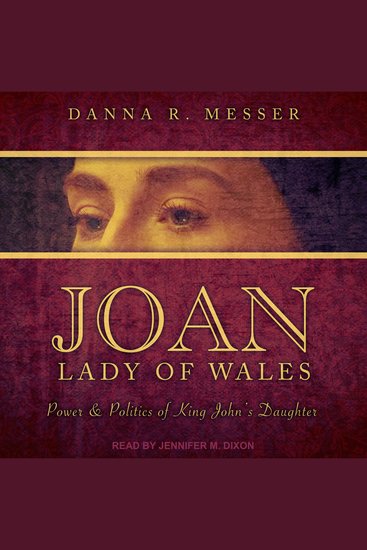
  • Joan Lady of Wales - Power & Politics of King John’s Daughter - cover

    Joan Lady of Wales - Power &...

    Danna R. Messer

    • 0
    • 0
    • 0
    The history of women in medieval Wales before the English conquest of 1282 is one largely shrouded in mystery. This misfortune touches even the most well-known royal woman of the time, Joan of England (d. 1237), the wife of Llywelyn the Great of Gwynedd, illegitimate daughter of King John and half-sister to Henry III. With evidence of her hand in thwarting a full scale English invasion of Wales to a notorious scandal that ended with the public execution of her supposed lover by her husband and her own imprisonment, Joan's is a known, but little-told or understood story defined by family turmoil, divided loyalties and political intrigue. 


    From the time her hand was promised in marriage as the result of the first Welsh-English alliance in 1201 to the end of her life, Joan's place in the political wranglings between England and the Welsh kingdom of Gwynedd was a fundamental one. This first-ever account of Siwan, as she was known to the Welsh, interweaves the details of her life and relationships with a gendered re-assessment of Anglo-Welsh politics by highlighting her involvement in affairs, discussing events in which she may well have been involved but have gone unrecorded and her overall deployment of royal female agency.
    Ver livro