
Join us on a literary world trip!
Add this book to bookshelf
Grey
Write a new comment Default profile 50px
Grey
Subscribe to read the full book or read the first pages for free!
All characters reduced
The Oqual Cycle: The 84-Year Rhythm of Human Civilization (2023) - cover

The Oqual Cycle: The 84-Year Rhythm of Human Civilization (2023)

Amjad Farooq

Publisher: Oquannium Xpress

  • 0
  • 0
  • 0

Summary

Today, almost every nation-on-earth is teetering on the brink of a societal meltdown as it finds itself in the midst of a sociopolitical upheaval, the like of which has not hitherto been witnessed in our lifetime.

Yet, hardly anyone realizes that like a winter that returns every year, such a concerted turmoil across the globe is also periodic due to what I have dubbed the "oqual cycle".

On the basis of scientific reasoning and mathematical modeling of history over the past 600 years, the oqual cycle posits that human civilization seemingly undergoes a sweeping global reset once every 84 years on average in order to purge itself of a plethora of wrongdoings from the societal ills through excesses and imbalances to transgressions amassed over that multidecadal period.

Unfortunately, there is no free music as one must pay the piper.

Indeed, such a societal reboot (or revitalization) is typically accomplished through a global conflict with the potential to not only wreak havoc but also strike fear into the hearts and minds of people on an apocalyptic scale so that they can put their sociopolitical differences aside and come together for the common good of the world at large.

The oqual cycle therefore lends human society a subtle albeit deadly mechanism to break ties with its dysfunctional past in order to begin anew rather than being held hostage from moving forward under its own weight, or even worse, continue down the rabbit hole in perpetuity with the potential for self-destruction.

Taken together, The Oqual Cycle is a must-read for everyone in that it will not only dramatically transform your perspective on how you view the world and your own place within it but it will also become your best companion to guide you as you navigate the dire fallout from the ongoing sociopolitical upheaval around much of the globe over the next decade or so and when you can expect to see everything around you to be hunky-dory once again like the good old days from the second half of 20th century.

 
Available since: 05/08/2023.

Other books that might interest you

  • First Inaugural Address - cover

    First Inaugural Address

    Ronald Reagan

    • 0
    • 0
    • 0
    On January 20, 1981, Reagan began his first presidential inauguration address by thanking Carter for his “gracious cooperation in the transition process”. 
    Reagan notes “one of the worst sustained inflations in our national history. It distorts our economic decisions, penalizes thrift, and crushes the struggling young and the fixed-income elderly alike.” “In this present crisis, government is not the solution to our problem; government is the problem.” 
    “For decades we have piled deficit upon deficit, mortgaging our future and our children's future for the temporary convenience of the present.” “It is my intention to curb the size and influence of the Federal establishment and to demand recognition of the distinction between the powers granted to the Federal Government and those reserved to the States or to the people.” 
    “If we look to the answer as to why for so many years we achieved so much, prospered as no other people on Earth, it was because here in this land we unleashed the energy and individual genius of man to a greater extent than has ever been done before.” “It is time to reawaken this industrial giant, to get government back within its means, and to lighten our punitive tax burden.” 
    “As for the enemies of freedom, … [w]e will maintain sufficient strength to prevail if need be, knowing that if we do so we have the best chance of never having to use that strength.” 
    “[T]ogether with God's help we can and will resolve the problems which now confront us. And after all, why shouldn't we believe that? We are Americans. God bless you, and thank you. 
    aspenleafmedia.com
    Show book
  • Spies and Lies - How China's Greatest Covert Operations Fooled the World - cover

    Spies and Lies - How China's...

    Alex Joske

    • 0
    • 0
    • 0
    Spies and Lies a groundbreaking exposé of elite influence operations by China's little-known Ministry of State Security. Revealing for the first time how the Chinese Communist Party has tasked its spies to deceive the world, it challenges the conventional account of China's past, present, and future. 


    Mere years ago, Western governments chose to cooperate with China in the hope that it would liberalize, setting aside concerns about human rights abuses, totalitarian ambitions, and espionage. But the axiom of China's 'peaceful rise' has been fundamentally challenged by the Chinese Communist Party's authoritarian behavior under Xi Jinping. How did we get it wrong for so long? 


    Spies and Lies pierces the Ministry of State Security's walls of secrecy and reveals how agents of the Chinese Communist Party have spent decades manipulating the West's attitudes—from an Australian prime minister to the US Congress, prominent think tanks, and the FBI—about China's rise. Through interviews with defectors and intelligence officers, classified Chinese intelligence documents, and original investigations, the book unmasks dozens of active Chinese intelligence officers along with global MSS fronts, including travel agencies, writers' associations, publishing houses, alumni associations, newspapers, a Buddhist temple, a record company, and charities.
    Show book
  • A Nation of Moochers - America's Addiction to Getting Something for Nothing - cover

    A Nation of Moochers - America's...

    Charles J. Sykes

    • 0
    • 0
    • 0
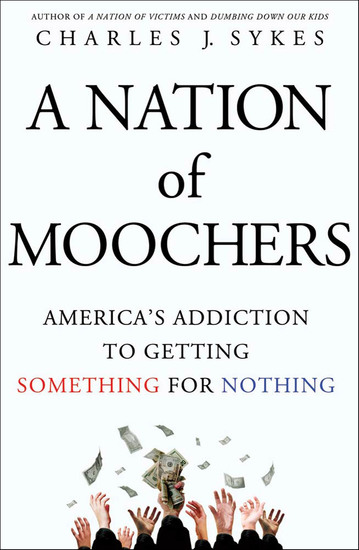
    We have experienced a shift in American character: we've become a nation of moochers. Increasingly dependent on the efforts of others over our own, Americans are free to freeload. From the corporate bailouts on Wall Street to the alarming increases in personal default and dependency, from questionable tax exemptions to enormous pension, healthcare, and other entitlement costs, the new moocher culture cuts across lines of class, race, and private and public sectors. And the millions that plan and behave sensibly, only to bail out the profligate? They're angry.Charles Sykes' argument is not against compassion or legitimate charity, but targets the new moocher culture, in which self-reliance and personal responsibility have given way to mass grasping after handouts. A Nation of Moochers is a persuasively argued and entertaining rallying cry for Americans who are tired of playing by the rules and paying for those who don't.
    Show book
  • The Channels of Student Activism - How the Left and Right Are Winning (and Losing) in Campus Politics Today - cover

    The Channels of Student Activism...

    Amy J. Binder, Jeffrey L. Kidder

    • 0
    • 0
    • 0
    An eye-opening analysis of collegiate activism and its effects on the divisions in contemporary American politics.  
     
    The past six years have been marked by a contentious political atmosphere that has touched every arena of public life, including higher education. Though most college campuses are considered ideologically progressive, how can it be that the right has been so successful in mobilizing young people even in these environments? 
     
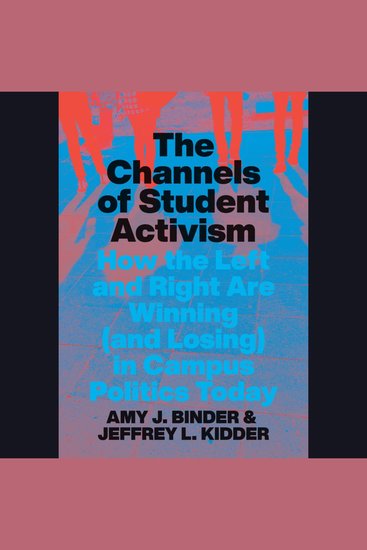
    As Amy J. Binder and Jeffrey L. Kidder show in this surprising analysis of the relationship between political activism on college campuses and the broader US political landscape, while liberal students often outnumber conservatives on college campuses, liberal campus organizing remains removed from national institutions that effectively engage students after graduation. And though they are usually in the minority, conservative student groups have strong ties to national right-leaning organizations, which provide funds and expertise, as well as job opportunities and avenues for involvement after graduation. Though the left is more prominent on campus, the right has built a much more effective system for mobilizing ongoing engagement. What’s more, the conservative college ecosystem has worked to increase the number of political provocations on campus and lower the public’s trust in higher education. 
      
    In analyzing collegiate activism from the left, right, and center, The Channels of Student Activism shows exactly how politically engaged college students are channeled into two distinct forms of mobilization and why that has profound consequences for the future of American politics. 
    Show book
  • Democratic Delusions - How the Media Hollows Out Democracy and What We Can Do About It 1st Edition - cover

    Democratic Delusions - How the...

    Natalie Fenton

    • 0
    • 0
    • 0
    A free media is inextricably linked to a healthy democracy, but in many parts of the world liberal democracies are deemed to be dying or on the demise—a demise that many forms of media have enabled while heralding themselves as democracy's savior. The hollowing out of democracy in these ways has left many people questioning the value of (neo)liberal democratic societies. What can we do about it? 


    Democratic Delusions explores the potential of our media and tech systems to be democratic and contribute to a just and transformative democracy. This is only possible, Natalie Fenton argues, by first situating our political systems and mediated worlds within global capitalism. By interrogating different media and their relationship to seven key elements of democracy—power, participation, freedom, equality, public good, trust, and hope—the book asks: What is the response of society when the ability of news media to speak truth to power has been restricted by corporate logic? And, how do we tackle a deep-rooted market logic that shifts public debate towards private interest and marginalizes progressive perspectives? The book explores how these elements can be reimagined through newly conceived media and tech landscapes and, ultimately, what democracy might be in a future mediated world that places more power in the hands of more people.
    Show book
  • John Rawls - Justice Fairness and the Veil of Ignorance - cover

    John Rawls - Justice Fairness...

    Hector Davidson

    • 0
    • 0
    • 0
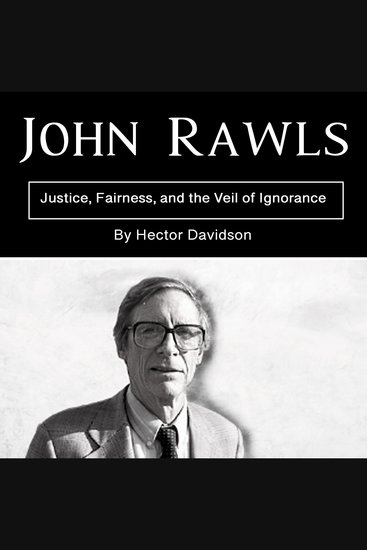
    John Rawls, one of the most influential philosophers of the 20th century, fundamentally reshaped the field of political philosophy with his groundbreaking work, A Theory of Justice (1971). His vision of "justice as fairness" offered a robust framework for understanding social cooperation and the principles that should govern a just society. By blending elements of social contract theory with contemporary concerns about inequality and human rights, Rawls addressed timeless questions about the nature of justice and the moral obligations of institutions.  
    Born on February 21, 1921, in Baltimore, Maryland, Rawls’ early life was marked by tragedy and intellectual rigor. He lost two brothers to illness at a young age, experiences that profoundly influenced his outlook on morality and the fragility of human life. Rawls attended Princeton University, where he earned his undergraduate degree in philosophy, and later completed his doctorate at Harvard University after serving in the U.S. Army during World War II. These formative years shaped his commitment to exploring ethical frameworks that could withstand the complexities of a modern, pluralistic world.  
    Rawls’ magnum opus, A Theory of Justice, introduced several key concepts that would come to define his philosophy. Central to his work was the idea of the "original position," a hypothetical scenario in which individuals design the principles of justice behind a "veil of ignorance." This veil prevents individuals from knowing their social status, wealth, abilities, or personal biases, compelling them to choose rules that are fair and impartial. The result is a system that prioritizes equal basic liberties for all, coupled with the difference principle, which allows social and economic inequalities only if they benefit the least advantaged members of society. 
    Show book