
Join us on a literary world trip!
Add this book to bookshelf
Grey
Write a new comment Default profile 50px
Grey
Subscribe to read the full book or read the first pages for free!
All characters reduced
The Life of King Henry V - Biography of England's Greatest Warrior King - cover

The Life of King Henry V - Biography of England's Greatest Warrior King

Alfred John Church

Publisher: DigiCat

  • 0
  • 0
  • 0

Summary

In "The Life of King Henry V," Alfred John Church presents a meticulously crafted biographical account that intertwines historical analysis with compelling narrative. Through a careful examination of primary sources and rich contextual commentary, Church captures the essence of Henry V's reign in the early 15th century. The book is marked by its eloquent prose and structure, seamlessly transitioning between key battles, political maneuvers, and personal insights, all while contextualizing Henry's legacy within the tumultuous landscape of medieval England. Church's literary style reflects a Victorian sensibility that combines scholarly rigor with engaging storytelling, making this work both informative and captivating. Alfred John Church was a distinguished scholar and translator, with a keen interest in Roman and English history. His background in classical literature and ancient history influenced his approach to writing biographies that emphasize character development and moral dimensions. Church's academic pursuits and engagement with historical texts specialized him in creating narratives that resonate with a modern audience, while paying homage to historical accuracy. This book is highly recommended for readers interested in medieval history, biography, and the complexities of leadership. Church's vivid portrayal of King Henry V not only sheds light on the man himself but also provides a broader understanding of the societal and historical forces at play during his reign. Readers will emerge with a deeper appreciation of both the individual and the era.
Available since: 11/14/2023.
Print length: 124 pages.
Other books that might interest you

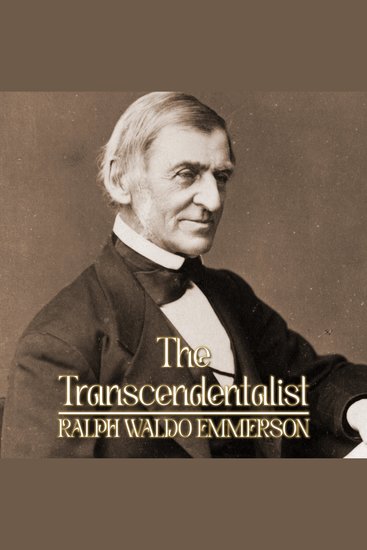
  • The Transcendentalist - cover

    The Transcendentalist

    Ralph Waldo Emerson

    • 0
    • 0
    • 0
    Brought to you by Altrusian Grace Media and narrated by Matthew Schmitz. "The Transcendentalist" is an essay by Ralph Waldo Emerson that was first published in 1841. In this work, Emerson defines and reflects on the Transcendentalist movement, a philosophical and literary movement that was influential in the United States in the 19th century. Transcendentalism emphasized the importance of individualism, intuition, and a direct connection to the divine, and rejected the materialism and conformity of contemporary society. In "The Transcendentalist," Emerson argues that Transcendentalists are people who seek to transcend the limitations of the physical world and find truth and meaning through spiritual and philosophical pursuits. He also notes that Transcendentalists embrace the power of the individual and reject the notion that authority should come from institutions or tradition. "The Transcendentalist" is considered a seminal work in American literature and is widely regarded as one of Emerson's most important works. The essay continues to be widely read and studied today as a classic expression of Transcendentalist thought and philosophy.
    Show book
  • Kiran Mazumdar-Shaw - cover

    Kiran Mazumdar-Shaw

    Press Trust Of India

    • 0
    • 0
    • 0
    Kiran Mazumdar-Shaw recognized among world's top 20 inspirational leaders in Biopharma
    Show book
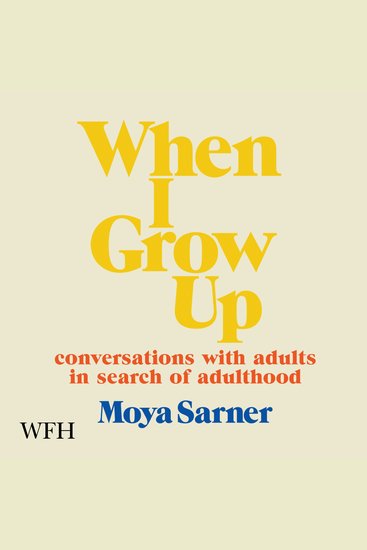
  • When I Grow Up - Coversations With Adults in Search of Adulthood - cover

    When I Grow Up - Coversations...

    Moya Sarner

    • 0
    • 0
    • 0
    When do you become an adult? What does it mean to grow up? And what are the experiences that propel us forward ? or keep us stuck? 
     
    As we get older, we pass many milestones, but for some of us it can feel as if adulthood is always just out of reach. 
     
    Journalist and psychotherapist-in-training Moya Sarner goes on a journey into what growing up really involves, and how we do it again and again throughout our lives. She draws on case studies, as well as her training, and theories of child psychology, psychoanalysis, neuroscience, and more, to explore what it means to be a ‘grown up’ and how we can meet the challenges and opportunities of every stage of our lives.
    Show book
  • The Confirmation Bias - How Seeking Information That Confirms Your Beliefs Skews Reality - cover

    The Confirmation Bias - How...

    William Rands

    • 0
    • 0
    • 0
    Confirmation bias is a cognitive phenomenon that plays a significant role in shaping our beliefs and perceptions. It refers to the tendency of individuals to search for, interpret, and remember information in a way that confirms their preexisting beliefs or theories, while disregarding or minimizing evidence that contradicts those beliefs. This bias is not limited to any particular field or context and can influence people in a variety of ways, from politics and religion to personal relationships and health decisions. 
    At its core, confirmation bias serves to protect the individual from cognitive dissonance, which is the uncomfortable tension that arises when a person holds conflicting beliefs or encounters information that challenges their worldview. By favoring information that aligns with their existing views, individuals reduce the mental discomfort of having to reconcile opposing ideas. While this process may offer short-term comfort, it can lead to long-term distortions in thinking, preventing growth and the development of more accurate or well-rounded perspectives. 
    This cognitive bias operates at both conscious and unconscious levels. On a conscious level, people may deliberately seek out information that supports their views, whether it be through selective reading, watching certain news outlets, or engaging in discussions with like-minded individuals. However, confirmation bias also operates unconsciously, influencing the way information is processed, remembered, and recalled. For example, individuals may be more likely to remember information that supports their beliefs and forget or dismiss data that contradicts them, even if they are unaware of this selective memory process.
    Show book
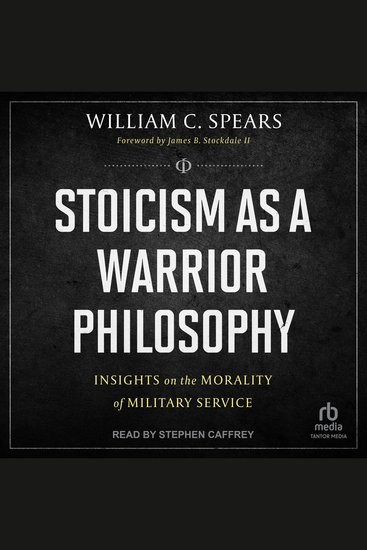
  • Stoicism as a Warrior Philosophy - Insights on the Morality of Military Service - cover

    Stoicism as a Warrior Philosophy...

    William C. Spears

    • 0
    • 0
    • 0
    • Can ancient philosophers really provide useful insights for the modern warfighter?• How might they reconcile cosmopolitan principles with patriotic duty?• Would a truly enlightened individual participate in the horrors of war?Stoicism as a Warrior Philosophy grapples with these questions and more. Authored by a serving military professional, it breaks down the most advanced concepts of Stoicism into plain language without oversimplifying. Exhaustively researched, steeped in original sources, and informed by examples from the cutting edge of modern conflict, it builds upon ancient thinking to develop innovative theories of patriotic duty and ethical warfighting.While Stoicism has seen an explosion in popular interest, and is widely embraced in military culture, no serious philosophical work has yet explored its full implications within the military profession. This book answers that call. Endorsed by senior military officials and academic philosophers, Stoicism as a Warrior Philosophy provides compelling and original contributions to both military ethics and the literature of modern Stoicism.
    Show book
  • Dark Psychology - Dealing with Difficult People Abuse Liars and Manipulators - cover

    Dark Psychology - Dealing with...

    Wesley Felt

    • 0
    • 0
    • 0
    In today’s world, our perception fundamentally shapes our reality. This explains why two people can have entirely different interpretations of the same event. The meaning we assign to events stems from our beliefs and emotions. So, can altering our perception actually change our world? If so, how can this be achieved? And if it's possible, how can we mold our reality to create a better one? 
      
    What we see defines what we believe, and what we believe dictates what we consider true. Our sense of truth then becomes our reality. Thus, our perception molds our reality. Although we share the same world, we each focus on our own perceived truths. Even though everyone has eyes, each person views the world in a unique way. It’s easy to find what we’re looking for, but harder to notice what we’re not searching for. For example, one person might see a glass as half-full while another sees it as half-empty. 
      
    “A pessimist sees the trouble in every opportunity; an optimist sees the chance in every trouble.” 
      
    Perception Is Relative 
      
    There are numerous examples of how perception influences our reality. When we buy a new white car, we suddenly notice that color and model everywhere. If we like or dislike a song, it seems to play frequently. When someone points out a particular mannerism or nervous tic in another person, it seems to become more noticeable afterward.
    Show book