Begleiten Sie uns auf eine literarische Weltreise!
Buch zum Bücherregal hinzufügen
Grey
Einen neuen Kommentar schreiben Default profile 50px
Grey
Jetzt das ganze Buch im Abo oder die ersten Seiten gratis lesen!
All characters reduced
Poirot : Short Stories Vol 1 - cover

Poirot : Short Stories Vol 1

Agatha Christie

Verlag: MB Cooltura

  • 0
  • 1
  • 0

Beschreibung

'My name is Hercule Poirot and I am probably the greatest detective in the world.´ This collection brings together several of superb short stories including The Mystery of Hunter´s Lodge; The Adventure of Cheap Flat and The Jewel Robbery at the Great Metropolitan. Poirot and Captain Hasting will make the most of their little gray cells to solve these cases.
Verfügbar seit: 27.02.2022.
Drucklänge: 65 Seiten.
Weitere Bücher, die Sie mögen werden

  • The Blind Accordionist - cover

    The Blind Accordionist

    C.D. Rose

    • 0
    • 0
    • 0
    In the novel Who's Who When Everyone Is Someone Else, the character "C. D. Rose" (not to be confused with the author C. D. Rose) searches an unnamed middle-European city for the long-lost manuscript of a little-known writer named Maxim Guyavitch. That search was fruitless, but in The Blind Accordionist, "C. D. Rose" has found the manuscript—nine sparkling, fable-like short stories—and he presents them here with an (hilarious) introduction explaining the discovery, and an afterword providing (hilarious) critical commentary on the stories, and what they might reveal about the mysterious Guyavitch. 


    The Blind Accordionist is another masterful book of world-making by the real C. D. Rose, absorbing in its mix of intelligence and light-heartedness, and its ultimate celebration of literature itself. It is the third novel in the series about "C. D. Rose," although the reader does not need to have read the previous two books. (The first in the series was The Biographical Dictionary of Literary Failure; the second was Who's Who When Everyone Is Someone Else.) 


    Like those books, The Blind Accordionist can be read both as a simple but wonderful collection of quirky stories, and as comedy—or as a beautiful and moving elegy on the nobility of writers wanting to be read.
    Zum Buch
  • A Legend - From their pens to your ears genius in every story - cover

    A Legend - From their pens to...

    Alexander Kuprin

    • 0
    • 0
    • 0
    Alexander Kuprin was born in Narovchat, Penza in Russia on 7th September 1870. 
    At 3 his Father died and he and mother moved to Moscow. By 10 he was enrolled at the Second Moscow Military High School and there his interest in literature began. The Alexander Military Academy followed and two years later he was a sub-lieutenant and posted to an Infantry Regiment for a further four years. 
    Despite his duties he was a now a keen writer and published his first short story at this time. His military duties also garnered him experiences for his breakthrough work ‘The Duel’.  Leaving the military he left for Kiev to work for local newspapers.  He continued to publish both stories and novels and by 1901 he was in St Petersburg becoming part of a group that included Chekhov, Ivan Bunin, Maxim Gorky and Leonid Andreyev.  
    In the years that followed further controversial works and acclaim followed.  His comments on the regime meant he was also put under secret police surveillance.   
    As World War I erupted, Kuprin opened a military hospital but was then given command of an infantry company in Finland. He was soon discharged on grounds of ill health.  
    The October Revolution saw him praise Lenin, but he warned that the Bolsheviks threatened Russian culture and might cause further widespread suffering to the peasants.  As Civil War raged he took his family to Helsinki and then on to Paris. 
    Exile saw his talents decline further and his succumbing to alcoholism. He became lonely and withdrawn. The family's poverty increased his malaise.   
    In May 1937, the Kuprin’s returned to Moscow.  He now saw his work published but wrote almost nothing new.  In 1938 his health rapidly deteriorated.  Already suffering from a kidney problems and sclerosis, he had now developed cancer of the oesophagus.  
    Alexander Kuprin died on 25th August 1938.
    Zum Buch
  • Stories Featuring Funerals - Stories spanning various genres and themes but connected by a sombre event - cover

    Stories Featuring Funerals -...

    Ambrose Bierce, Mary Butts,...

    • 0
    • 0
    • 0
    The funeral is the one appointment we’d rather never make.  Whether as the deceased, or as a friend and loved one attending, a burial is the grim reminder that a life has passed and the future must now be made without them.   Our talented authors explore this period of time in their own individual and inimitable ways as only they can.  
     
    01 - Stories Featuring Funerals - An Introduction 
    02 - John Mortonson's Funeral by Ambrose Bierce 
    14 - After the Funeral by Mary Butts 
    04 - The Sculptor's Funeral by Willa Cather 
    05 - Silence by Leonid Nikolaevich Andreyev 
    06 - Bobok by Fyodor Dostoyevsky 
    07 - The Way To The Churchyard by Thomas Mann 
    08 - Jose Matias by Eca de Queiros 
    09 - The Country Doctor by Mary E Mann 
    10 - Siegmund Simon by Alfred Lichtenstein 
    11 - When I Was Dead by Vincent O'Sullivan 
    12 - The Wedding Eve by Morley Roberts 
    13 - A Trip To The Other World by Kalman Mikszath
    Zum Buch
  • A Rainy Day - From their pens to your ears genius in every story - cover

    A Rainy Day - From their pens to...

    Mary Elizabeth Hawker writing as...

    • 0
    • 0
    • 0
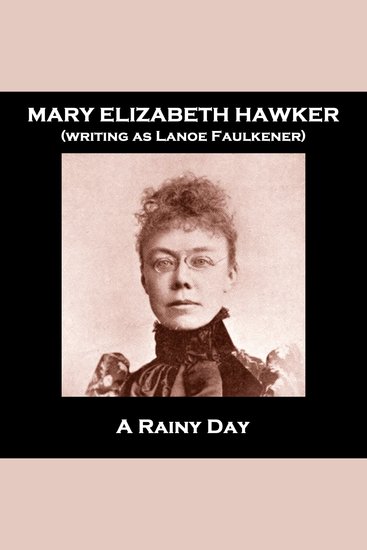
    The bookshelves of British literature are incredible collections that have gathered together centuries of very talented authors.  From these Isles their fame spread and whilst among their number many are now forgotten or neglected their talents endure.  Among them is Mary Elizabeth Hawker.
    Zum Buch
  • Aloysha the Pot - From their pens to your ears genius in every story - cover

    Aloysha the Pot - From their...

    Leo Tolstoy

    • 0
    • 0
    • 0
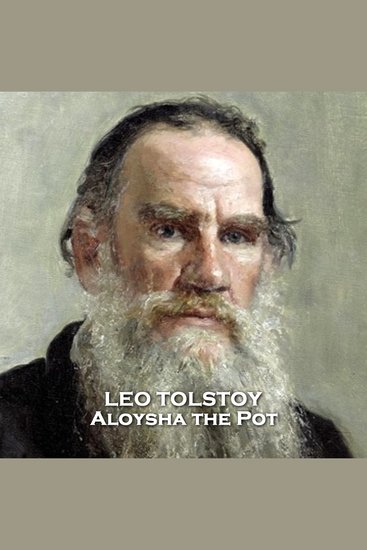
    Leo Tolstoy was born in 1828 in the Russian province of Tula to a wealthy noble family. As a child, he had private tutors but he showed little interest in any formal education. When he went to the University of Kazan in 1843 to study oriental languages and law, he left without completing his courses.  Life now was relaxed and idle but with some writing also taking place.  Gambling debts forced an abrupt change of path and he joined the army to fight in the Crimean War.  He was commended for his bravery and promoted but was appalled at the brutality and loss of life.  He recorded these and other earlier experiences in his diaries which formed the basis of several of his works. 
    In 1852 ‘Childhood’ was published to immediate success and was followed by ‘Boyhood’ and ‘Youth’. 
    His experience in the army and the horrors he witnessed resulted in ‘The Cossacks’ in 1862 and the trilogy ‘Sevastopol Tales’. After the war he travelled around Europe, visiting London and Paris and meeting such luminaries as Victor Hugo and Charles Darwin.  
    It was now that Tolstoy began his masterpiece, ‘War and Peace’. Published in 1869 it was an epic work that changed literature. He quickly followed this with ‘Anna Karenina’.  
    These successes made Tolstoy rich and helped him accomplish many of his dreams but also brought problems as he grappled with his faith and the lot of the oppressed poor. These revolutionary views became so popular that the authorities now kept him under surveillance.  
    He led a life of asceticism and vegetarianism and put his socialist ideals into practice by establishing numerous schools for the poor and food programmes. He also believed in giving away his wealth, which caused much discord with his wife.  
    His writing continued to bring forth classics such as ‘The Death of Ivan Ilyich’ and many brilliant and incisive short stories such as ‘How Much Land Does A Man Need’.  
    In 1901 Tolstoy was excommunicated from the Church and controversially deselected for the Nobel Prize for Literature. 
    Whilst undertaking a pilgrimage by train in October 1910 with his daughter Aleksandra he caught pneumonia in the nearby town of Astapovo.  Leo Tolstoy died on November 9th, 1910, he was 82.
    Zum Buch
  • The Diary of a God - cover

    The Diary of a God

    Barry Pain

    • 0
    • 0
    • 0
    The Diary of a God by Barry Pain is a satirical short story that presents the fictional diary of a deity who observes and reflects upon human behavior and the absurdities of life on Earth. The god, who remains unnamed, details his interactions with humanity, expressing both amusement and frustration at their follies. 
    Zum Buch