Junte-se a nós em uma viagem ao mundo dos livros!
Adicionar este livro à prateleira
Grey
Deixe um novo comentário Default profile 50px
Grey
Assine para ler o livro completo ou leia as primeiras páginas de graça!
All characters reduced
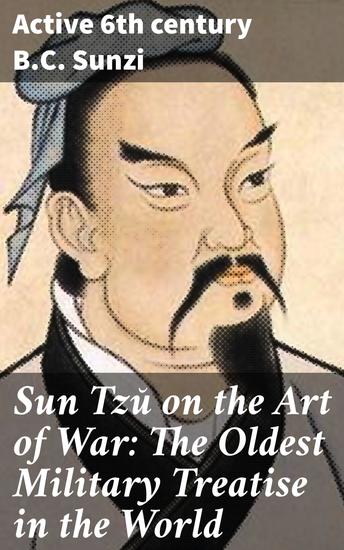
Sun TzÅ­ on the Art of War: The Oldest Military Treatise in the World - Enriched edition Strategic Insights from Ancient Warfare Mastery - cover
LER

Sun TzÅ­ on the Art of War: The Oldest Military Treatise in the World - Enriched edition Strategic Insights from Ancient Warfare Mastery

active 6th century B.C. Sunzi

Tradutor Lionel Giles

Editora: Good Press

  • 0
  • 0
  • 0

Sinopse

Sun Tz≈≠ on the Art of War: The Oldest Military Treatise in the World stands as a seminal work in the canon of military strategy and philosophy, providing timeless insights into the art of warfare and governance. Written in the 6th century B.C., Sunzi's treatise is characterized by its concise, aphoristic style which encapsulates complex concepts into succinct maxims. The book encompasses key themes such as the importance of strategy over brute force, the psychological dimensions of combat, and the necessity of adaptability. Embedded in the context of ancient Chinese thought, it resonates with Daoist elements, emphasizing harmony and Wu Wei (non-action), thus shaping the approaches of generations of military leaders and strategists across cultures. The enigmatic figure of Sunzi, whose life remains largely shrouded in mystery, is believed to have drawn from both his military experiences and the sociopolitical turbulence of his time. His insights emerge from an understanding of human nature, the dynamics of power, and the need for disciplined leadership. Some scholars suggest that his work may also reflect the historical context of the Warring States period in China, where strategic acumen was crucial for survival and dominance. I wholeheartedly recommend this influential text to scholars, military enthusiasts, and anyone seeking a deeper understanding of strategy and human conflict. Its relevance transcends its time, serving not only as a guide for military operations but also as a philosophical treatise on leadership, decision-making, and the complexities of human relationships.

In this enriched edition, we have carefully created added value for your reading experience:
- A succinct Introduction situates the work's timeless appeal and themes.
- The Synopsis outlines the central plot, highlighting key developments without spoiling critical twists.
- A detailed Historical Context immerses you in the era's events and influences that shaped the writing.
- An Author Biography reveals milestones in the author's life, illuminating the personal insights behind the text.
- A thorough Analysis dissects symbols, motifs, and character arcs to unearth underlying meanings.
- Reflection questions prompt you to engage personally with the work's messages, connecting them to modern life.
- Hand‐picked Memorable Quotes shine a spotlight on moments of literary brilliance.
- Interactive footnotes clarify unusual references, historical allusions, and archaic phrases for an effortless, more informed read.
Disponível desde: 17/01/2022.
Comprimento de impressão: 216 páginas.
Outros livros que poderiam interessá-lo

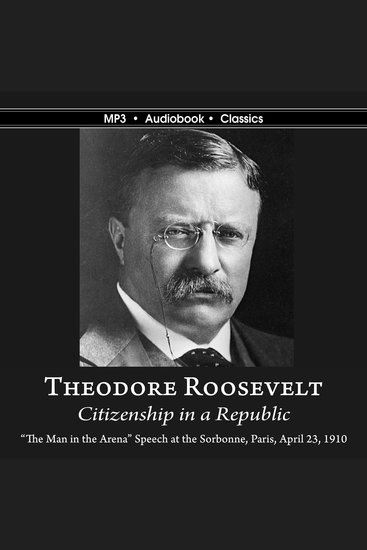
  • Citizenship in a Republic - "Man in the Arena" Address given at Sorbonne in Paris France on April 23 1910 - cover

    Citizenship in a Republic - "Man...

    Theodore Roosevelt

    • 0
    • 0
    • 0
    “Citizenship in a Republic” is the title of a speech given by Theodore Roosevelt at the Sorbonne in Paris, France, on April 23, 1910. In the speech Roosevelt discusses the attributes required of its citizens and leaders to sustain a thriving national character, not least of which are a high moral character and energetic engagement. He has harsh words for those who act purely in self-interest, who cause division, and who sit on the sidelines while others do the heavy lifting. The address is also known as “The Man in the Arena” speech owing to a notable passage that is often quoted:“It is not the critic who counts; not the man who points out how the strong man stumbles, or where the doer of deeds could have done them better. The credit belongs to the man who is actually in the arena, whose face is marred by dust and sweat and blood; who strives valiantly; who errs, who comes short again and again, because there is no effort without error and shortcoming; but who does actually strive to do the deeds; who knows great enthusiasms, the great devotions; who spends himself in a worthy cause; who at the best knows in the end the triumph of high achievement, and who at the worst, if he fails, at least fails while daring greatly, so that his place shall never be with those cold and timid souls who neither know victory nor defeat.”Numerous politicians, athletes, speakers and others have turned to the passage for inspiration. Incoming freshman at the U.S. Naval Academy are required to memorize the passage. NBA champion LeBron James has the “Man in the Arena” written on his shoes.
    Ver livro
  • Horatio Nelson - His Life His Service His Death and His Legacy - cover

    Horatio Nelson - His Life His...

    Kelly Mass

    • 0
    • 0
    • 0
    Horatio Nelson can be seen as one of the most courageous, strategic, valiant British generals in history. His tactics in the navy have led their empire to glorious victories in the 18th and beginning of the 19th century. During the wars against Napoleon, the Scandinavians, and in the West Indies, he was an exemplary leader, strategists, and combatant. The British Empire stretched all the way from the Caribbean to Egypt and beyond. Needless to say, much help was needed in various areas in the world. 
    Learn more about this brave warrior, someone who fit exactly into that time frame to keep their empire afloat, through their navy ships, their battles, and their victories.
    Ver livro
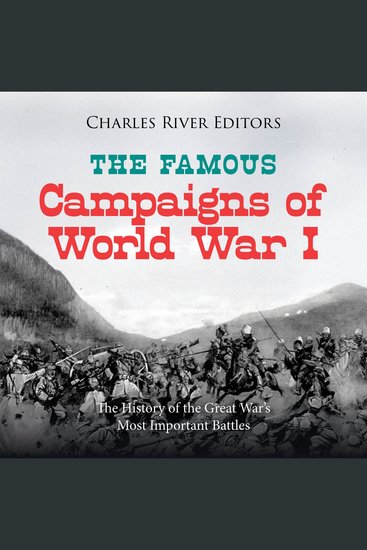
  • Famous Campaigns of World War I The: The History of the Great War’s Most Important Battles - cover

    Famous Campaigns of World War I...

    Charles River Editors

    • 0
    • 0
    • 0
    World War I, also known in its time as the “Great War” or the “War to End all Wars”, was an unprecedented holocaust in terms of its sheer scale. Fought by men who hailed from all corners of the globe, it saw millions of soldiers do battle in brutal assaults of attrition which dragged on for months with little to no respite. Tens of millions of artillery shells and untold hundreds of millions of rifle and machine gun bullets were fired in a conflict that demonstrated man’s capacity to kill each other on a heretofore unprecedented scale, and as always, such a war brought about technological innovation at a rate that made the boom of the Industrial Revolution seem stagnant.  
    	The enduring image of World War I is of men stuck in muddy trenches, and of vast armies deadlocked in a fight neither could win. It was a war of barbed wire, poison gas, and horrific losses as officers led their troops on mass charges across No Man’s Land and into a hail of bullets. While these impressions are all too true, they hide the fact that trench warfare was dynamic and constantly evolving throughout the war as all armies struggled to find a way to break through the opposing lines. 
    	Though World War I is almost synonymous with trench warfare, that method of combat was nothing new. There had been extensive use of trenches during the later stages of the American Civil War (1864-1865), and trench warfare was constant during the Second Boer War (1899-1902), the Russo-Japanese War (1904-1905), and the Balkan Wars (1912-1913). These conflicts showed that modern firepower combined with entrenched positions gave a decisive advantage to the defender, yet European observers failed to learn any lessons from these conflicts, and the scale of trench warfare in World War I far eclipsed anything seen before or since, especially on the Western Front.
    Ver livro
  • Am I Trans Enough? - How to Overcome Your Doubts and Find Your Authentic Self - cover

    Am I Trans Enough? - How to...

    Alo Johnston

    • 0
    • 0
    • 0
    Am I trans enough? The answer is undoubtedly yes. You are. 


    Alo Johnston has been where you are. From watching every transition story on YouTube and navigating online message boards for answers to finally starting testosterone and transitioning himself, he now walks alongside you every step of the way to guide you towards acceptance of who you truly are. 


    Born out of thousands of hours of research and conversations with hundreds of trans people, Am I Trans Enough? digs deep into internalized transphobia and the historical narratives that fuel it. It unveils what happens after you come out, or begin questioning living as a trans person, in a world that works against you. 


    Use this book as a space to engage with your fears and explore your doubts without the pressure of needing to be a perfect trans representative. If you are just beginning your trans journey, are twenty years into transition, or have no idea if you are even trans at all, this book will help you to become your most authentic self.
    Ver livro
  • The Wonderfull Wizard of Oz - cover

    The Wonderfull Wizard of Oz

    Lyman Frank Baum

    • 0
    • 0
    • 0
    The Wonderful Wizard of Oz is an American children's novel written by author L. Frank Baum and illustrated by W. W. Denslow. The first novel in the Oz books, the Kansas farm girl named Dorothy ends up in the magical Land of Oz after she and her pet dog Toto are swept away from their home by a tornado. Upon her arrival in Oz, she learns she cannot return home until she has destroyed the Wicked Witch of the West. The book was first published in the United States in May 1900 by the George M. Hill Company. In January 1901, the publishing company completed printing the first edition, a total of 10,000 copies, which quickly sold out. It had sold three million copies by the time it entered the public domain in 1956. It was often reprinted under the title The Wizard of Oz, which is the title of the successful 1902 Broadway musical adaptation as well as the classic 1939 live-action film. The ground-breaking success of both the original 1900 novel and the 1902 Broadway musical prompted Baum to write thirteen additional Oz books which serve as official sequels to the first story. Over a century later, the book is one of the best-known stories in American literature, and the Library of Congress has declared the work to be "America's greatest and best-loved homegrown fairytale."
    Ver livro
  • Harry Truman's Excellent Adventure - cover

    Harry Truman's Excellent Adventure

    Matthew Algeo

    • 0
    • 0
    • 0
    On June 19, 1953, Harry Truman got up early, packed the trunk of his Chrysler New Yorker, and did something no other former president has done before or since: he hit the road. No Secret Service protection. No traveling press. Just Harry and his childhood sweetheart Bess off to visit old friends, take in a Broadway play, celebrate their wedding anniversary in the Big Apple, and blow a bit of the money he’d just received to write his memoirs. Hopefully incognito. In this lively history, author Matthew Algeo meticulously details how Truman’s plan to blend in went wonderfully awry. Fellow diners, bellhops, cabbies, squealing teenagers at a Future Homemakers of America convention, and one very by-the-book Pennsylvania state trooper all unknowingly conspired to blow his cover. Algeo revisits the Trumans’ route, staying at the same hotels and eating at the same diners, and takes listeners on brief detours into topics such as the postwar American auto industry, McCarthyism, the nation’s highway system, and the decline of Main Street America. By the end of the 2,500-mile journey, you will have a new and heartfelt appreciation for America’s last citizen-president.
    Ver livro